The important commodity index rebalancing begins on Friday, with two major investment banks predicting "silver will adjust within two weeks," and Goldman Sachs stating "the key is still London."

Wallstreetcn
2026.01.08 00:24
portai
I'm PortAI, I can summarize articles.

The Bloomberg Commodity Index (BCOM) annual rebalancing will start this Friday, lasting from January 9 to January 15. Deutsche Bank and TD Securities expect that $7.7 billion in silver sell orders will flood the market in the next two weeks, equivalent to 13% of the total open interest in the COMEX silver market, which may trigger a significant price correction. Goldman Sachs believes that as long as the tight inventory situation in London remains unresolved, extreme price volatility will continue to exist

The Bloomberg Commodity Index (BCOM) annual rebalancing will start this Friday, putting silver under significant selling pressure. Deutsche Bank and TD Securities expect $7.7 billion in silver sell orders to flood the market over the next two weeks, equivalent to 13% of the total open interest in the COMEX silver market, which could trigger a substantial price correction.

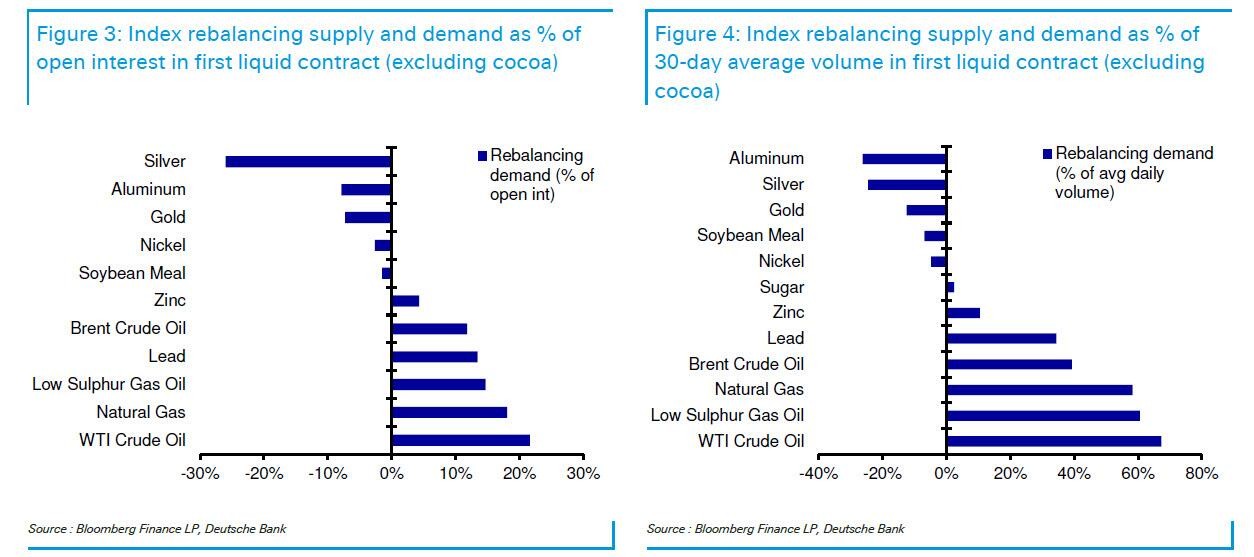
According to Bloomberg data, this rebalancing will reduce the gold weight from 20.4% to 14.9%, and silver will also face a weight reduction. Deutsche Bank analyst Michael Hsueh pointed out that in terms of open interest size, silver will bear the largest rebalancing selling pressure, followed by aluminum and gold. The rebalancing period will last from January 9 to January 15.

TD Securities analyst Daniel Ghali warned that the trading volume of the largest silver ETF has reached extreme levels typically seen only at historical market tops, with premiums at historical highs, reflecting the speculative frenzy among retail investors. He believes that the recent surge in silver is "similar to a liquidation arbitrage trade, and what follows will be the historically common severe repricing in the commodity cycle."

Goldman Sachs, on the other hand, presents a different view from a supply and demand perspective, arguing that liquidity in the London market is the key factor determining the direction of silver prices. Analyst Lina Thomas at the bank expects that as long as the tight inventory situation in London persists, extreme price volatility will continue.

Index Rebalancing Triggers Massive Sell Orders

The Bloomberg Commodity Index employs an annual rebalancing mechanism, with weight calculations based on two-thirds of trading volume and one-third of global production, and sets weight limits at the commodity, sector, and group levels. According to index rules, the weight of a single commodity cannot exceed 15% to maintain diversification.

Deutsche Bank's analysis shows that the significant reduction in gold weight has indeed hit this upper limit regulation. In terms of open interest size, the commodities facing the largest selling pressure during the rebalancing period are silver, aluminum, and gold; measured by average daily trading volume, they are aluminum, silver, and gold in that order.

Deutsche Bank analyst Michael Hsueh estimates that a sale of 2.4 million ounces of gold could lead to a price drop of 2.5%-3.0%, depending on the ETF sensitivity model and time window used. He reviewed past five years of index rebalancing events and found that significant weight changes between 2021 and 2024 aligned with price trends, but the reduction in gold weight in 2025 was accompanied by a rise in gold prices.

This rebalancing has a negative impact on precious metals but is favorable for crude oil. The commodities with the highest rebalancing demand are WTI crude oil, natural gas, and low-sulfur diesel.

Retail Frenzy Pushes Silver to Dangerous Levels

TD Securities' Daniel Ghali noted in a report on December 31 that the trading volume of the largest silver ETF has reached extreme levels, similar to those seen only at previous market tops The premium of this product relative to net asset value (NAV) is at a historical high, reflecting the speculative frenzy of retail investors, while also highlighting liquidity constraints.

Ghali emphasized that since November, the "devilish blow-off top" in silver is not a reflection of demand, supply, or fundamentals. He expects that 13% of the open contracts in the COMEX silver market will be sold off in the next two weeks, leading to a significant repricing of prices under the ongoing liquidity vacuum.

This $7.7 billion sell-off and related trading activity will come from a broad rebalancing of commodity indices, with trading volumes potentially far exceeding the extreme levels previously set by the largest silver ETFs.

London Inventory Tightness Amplifies Price Volatility

Goldman Sachs analyst Lina Thomas offered a different perspective from a supply-demand structural angle. She expects extreme price volatility—whether up or down—to continue and advises risk-averse clients to remain cautious.

Thomas pointed out that recent price movements do reflect the inflow of private investor funds under the themes of Federal Reserve rate cuts and potential "diversification," but the liquidity squeeze in the London market has amplified these fluctuations, as London is the setting for the silver benchmark price.

Speculation surrounding U.S. trade policy—where silver is listed as a critical mineral and could theoretically face tariffs of up to 50% (though exempted until April 2025)—has prompted market participants to preemptively import the metal into the U.S. earlier in 2025, leading to outflows from London inventories and a reduction in available circulation. As demand for silver ETFs rapidly rises to absorb more physical silver, a temporary shortage of deliverable silver has emerged in the London market.

To address the temporary shortage in the London market, traders have turned to the leasing market, where physical silver holders lend silver for a fee. The cost of borrowing silver (leasing rates) has surged sharply, indicating recent tightness.

Weak Inventories Create Squeeze Conditions

Goldman Sachs data shows that lower inventories create conditions for a squeeze, where the influx of investor funds absorbs the remaining metal in London vaults, accelerating price increases, while a reversal occurs sharply when the tightness eases. Typically, a net demand of 1,000 tons of silver per week drives prices up by about 2%, but under tight conditions, this sensitivity has soared to 7% (and vice versa).

Thomas believes that as long as the mismatch of silver in the U.S. persists and London liquidity fails to be restored through silver from other regions, prices may rise further if investor enthusiasm continues. ETF holdings remain below the peak in 2021 and could rise further under the themes of Federal Reserve rate cuts and potential "diversification." The net managed fund positions in COMEX are below historical averages, indicating that despite a 138% increase in 2025, investor demand has not overly expanded.

However, Goldman Sachs warns that if London liquidity is restored, the downside risk for silver prices is significant. For example, if the silver currently stranded in the U.S. flows back to London, it could alleviate the tightness in London and drive prices down.

Goldman Sachs believes the likelihood of the U.S. imposing tariffs on silver remains low, so a clear policy could trigger some metal to flow back from the U.S., alleviating the tightness in London and pushing prices down. However, despite a clear statement last August exempting gold from U.S. tariffs, most gold remains in the New York COMEX vaults, reflecting the lingering policy tail risks If silver follows the same pattern, most silver may continue to remain in the New York COMEX vaults, and extreme price fluctuations may persist even after the U.S. silver tariff issue is clearly stated