


More ruthless than Doubao phones! Gemini TV debuts at CES, Google fires the first shot in the living room revolution

At the 2026 CES exhibition, Google launched the Gemini TV, marking the beginning of a living room revolution. The exhibition showcased numerous innovative technology products, including the Lollipop Star bone conduction lollipop, iPolish digital wearable nail art, and VOVO smart health toilet. AI technology became the focus of the exhibition, and Google's Gemini TV attracted attention with its smart features, heralding a transformation in future televisions
Every January, the global tech community focuses on the same place: Las Vegas CES.
As the largest and oldest consumer electronics show in the world, CES is never just a product launch event; it is a "prophecy" of technology trends for the next decade.
From the first VCR to the first plasma TV, from Blu-ray to 4K, from smart homes to autonomous driving—countless technologies that have changed human life made their debut here.
In 2026, CES welcomed its craziest edition yet!

At this moment at the International Consumer Electronics Show CES, the tech industry's ability to "create" has once again surpassed the imagination of carbon-based life forms.
The truly "sound-producing" Lollipop Star bone conduction lollipop: when you bite into it, it plays music in your brain...

A blessing for beauty enthusiasts, the iPolish digital wearable nail art allows you to simply put your hand into a special machine, and the nail color instantly switches through an app, making nail salon owners want to flee overnight.

But the most astonishing product has to be VOVO's smart health toilet. This item sells for $5,000 and not only features automatic cleaning but can also analyze your urine in real-time!
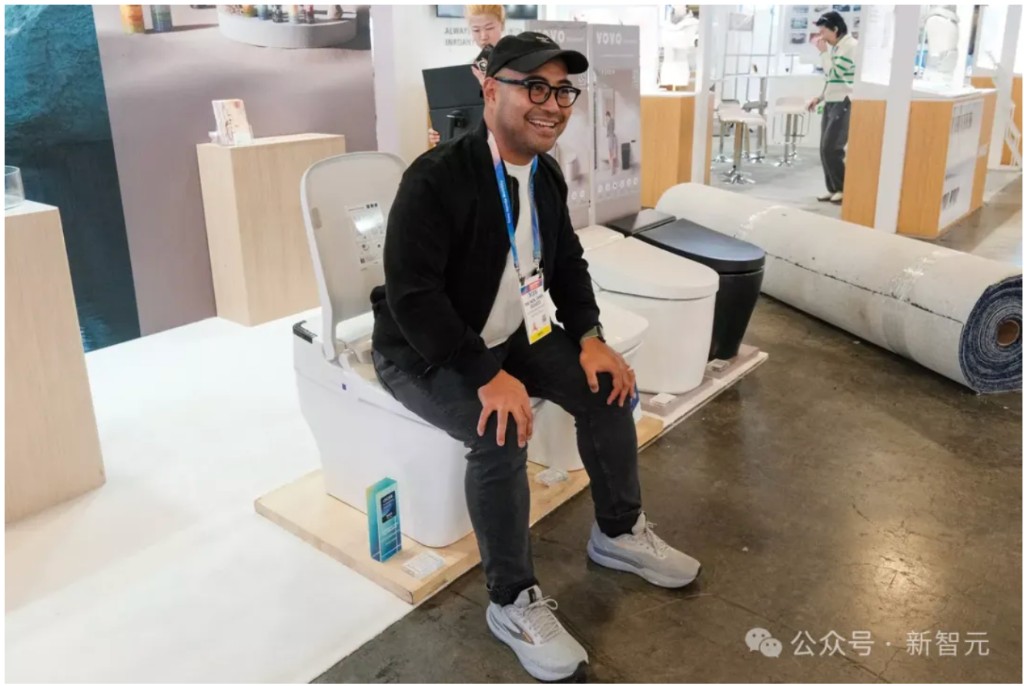
In this "tech Spring Festival Gala" where anything is possible, everyone is eager to witness new history—the next "iPhone moment."
This event almost gathers the highest level of technology currently in the consumer field worldwide.
Everyone is looking forward to a groundbreaking hardware that can once again disrupt the world, just like when Jobs pulled the MacBook Air out of an envelope or unveiled the first-generation iPhone.
AI will undoubtedly occupy the center stage of CES for the third consecutive year.
Whether AI is a real boom or a capital bubble, the world seems to have fallen into a frenzy of "everything needs AI"—from smart homes to wearable devices, AI functionality is becoming a standard feature of new products.
For the audience, integrated AI and built-in smart features are no longer "exclusive selling points" in the consumer electronics field However, Google has quietly planted a heavy bomb in the most inconspicuous place—the television in your living room.
No expensive headsets are needed, nor do you need to implant chips in your brain; Google directly announced: the television has gained intelligence.
Television Gains Intelligence: Google's Update is Incredible
Google believes that artificial intelligence can enhance the television viewing experience, which is why it introduced its Gemini AI into Google TV devices last November.
At CES 2026, Google further enhanced the practicality of Google TV with Gemini:
- Natural language content discovery and recommendations
- Educational deep learning
- Photo and video editing
- Voice settings optimization
Google is no longer satisfied with a television that "can be watched"; it wants the television to "be able to chat," "be able to search," and "be able to act."
With Gemini entering the living room, the television instantly transforms into a universal intelligent brain!
The television is no longer just for "watching," but an AI assistant you can converse with.
These features are designed specifically for a large-screen experience. You can talk to the television, tell it what you want to watch, or mention the viewing preferences of two family members and ask it to recommend movies that both would enjoy.
If you forget the title but remember the plot or a certain actor, that's okay—Gemini can help you find it.
You can also ask it: "What’s the name of that popular hospital drama recently?"
Gemini not only understands your meaning instantly but can also generate visually rich answers by combining text, images, film context, and real-time sports events.
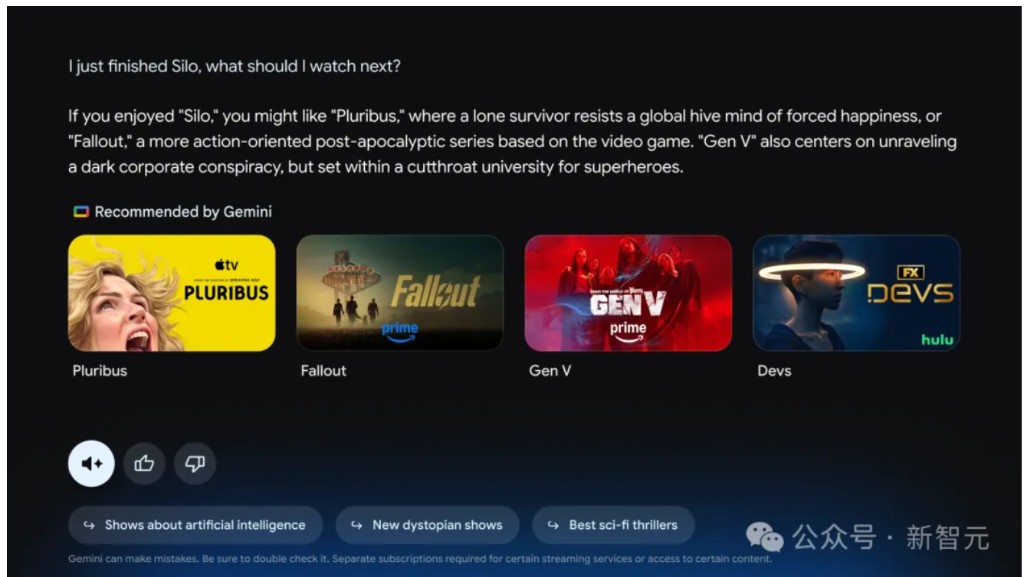
Not just for entertainment, but also for learning; the television transforms into an AI personal tutor.
Google also demonstrated how Gemini can turn the television into a knowledge exploration tool.
When you are interested in a certain topic, the television can provide interactive explanations, presenting complex concepts in voice + image + animation formats. You can continue to ask questions for deeper explanations.
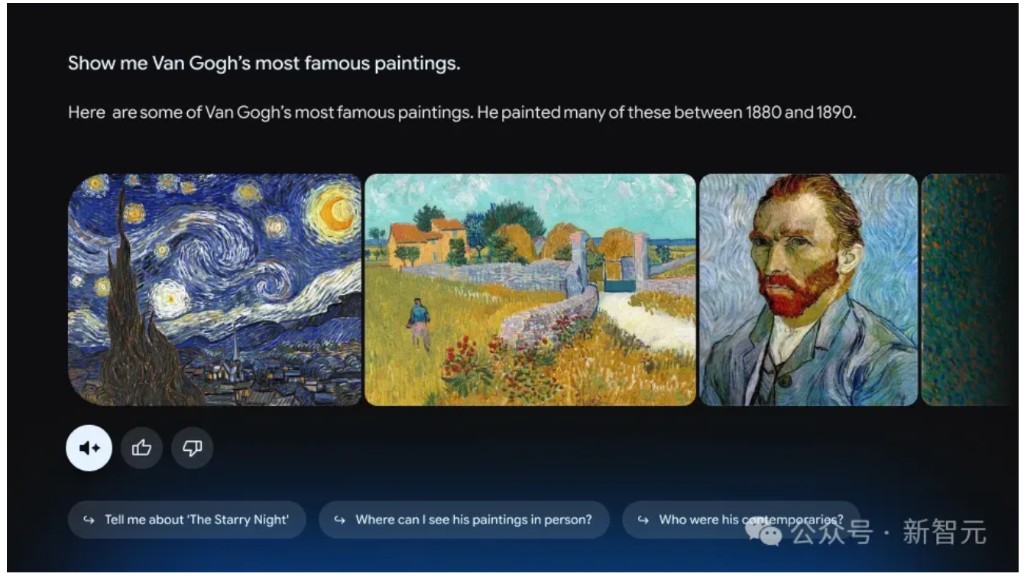
This elevates the television from an "entertainment tool" to a "learning window."
Using AI to Recall the Past and Transform Old Photos into Cinematic Masterpieces.
Gemini has also integrated with Google Photos. You can search for specific people, scenes, or moments.

The most eye-catching highlight is the addition of Nano Banana and Veo support, allowing you to apply artistic style filters to photos and videos with one click, generating cinematic slideshows that package memories into masterpieces
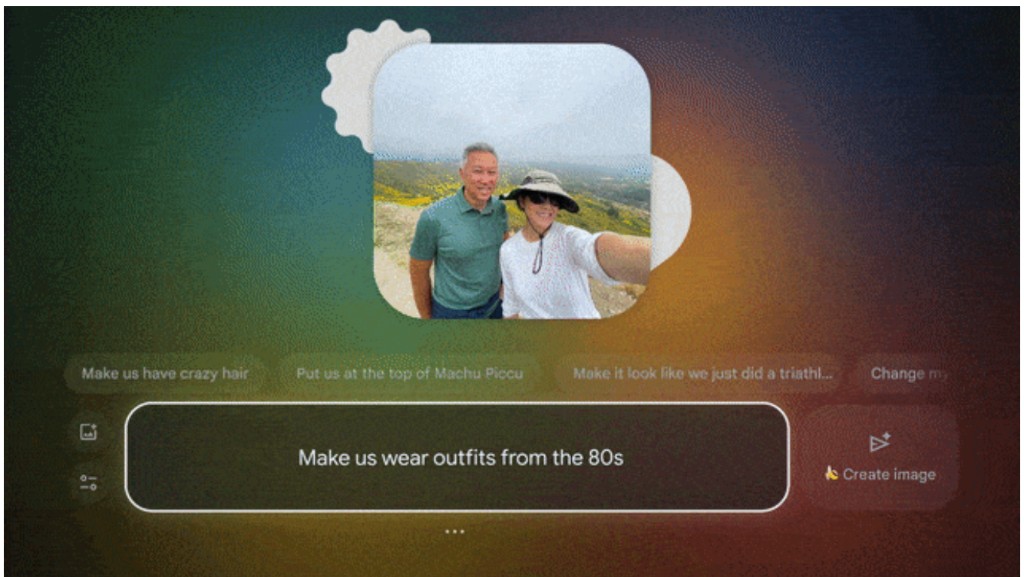
In particular, the addition of Veo opens up infinite possibilities for the future, completely reconstructing the television content experience.
In other words, users can directly generate images and videos using AI on the television, whether it's turning family photos into memes or "generating" an original video clip on the spot, the television can handle it all.
Now you can engage in AI editing and creation in your living room, enjoying entertainment effortlessly.
If you think these features are interesting but not really a "must-have," that makes sense, as you can also do this on a computer with Gemini.
However, Google has also enhanced Gemini's practical voice control capabilities this time, making it more like a true "understanding" television butler.
You can directly say to it:
The screen is too dark, I can't hear the dialogue.
Gemini will automatically adjust the screen brightness or volume without you having to dig through the menu for settings, ensuring uninterrupted viewing and a smoother experience.
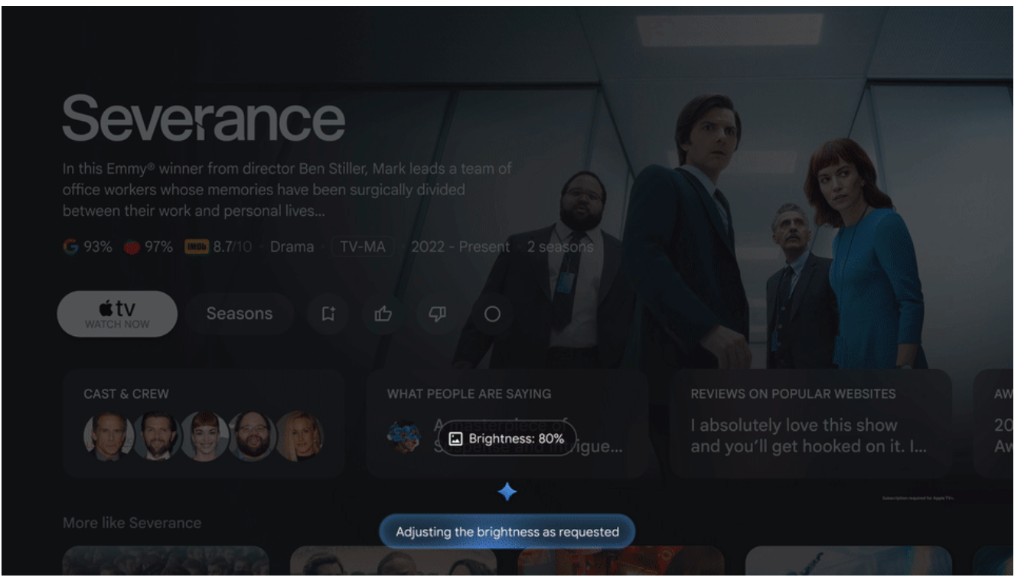
Just speak, and the television settings are done with a single command.
In the future, it may even be possible to perform operations like this:
If you suddenly shout, "What? Say it again!" Gemini will automatically replay and turn on subtitles, ensuring you don't miss any key dialogue.
The most practical upgrade might be this: You no longer have to search through menus.
This is truly a language interaction.
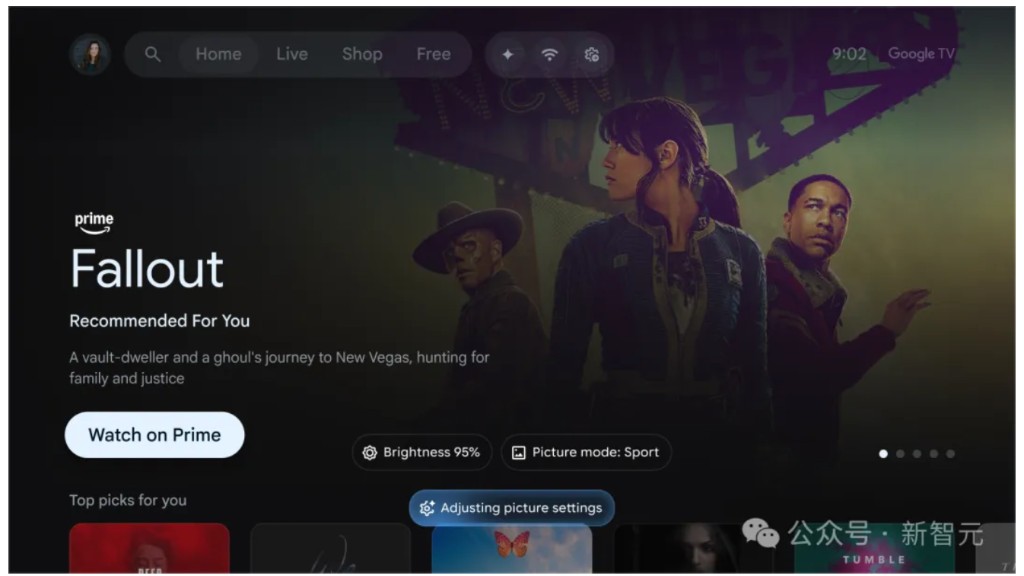
According to reports, the reason Gemini televisions respond quickly is due to the locally running language model, which not only has low latency but also greatly enhances privacy protection.
Why did Google choose television as one of the entry points for Gemini?
There may be three reasons:
- Sufficient visual space: Televisions can display rich graphics, videos, and interactive content, making them a natural stage for multimodal AI;
- Family sharing device: In family scenarios, televisions serve as a platform for collective interaction, suitable for exploring multi-person recommendations, family memories, and other applications;
- Smart home control hub: Televisions often connect to home networks and smart devices, making them an ideal carrier for voice control and AI centralization.
In simple terms, televisions are evolving from "content terminals" to "AI terminals."
The Next Battlefield for AI: Google Enters the Living Room
After AI models, where is the next battlefield?
OpenAI has revealed that their first consumer tech products will be personal devices, reportedly including home audio players and smart writing pens Domestic trials of Doubao phones have begun, and they are hard to come by.
Apple's Vision Pro will be released in February, focusing on spatial computing and immersive interaction.
Google's choice is to "invade" the living room first.
In terms of screen size, Google TV may be the "largest screen" for AI.
AI is continuously evolving and has finally entered daily life, with more smart home products able to "listen," "observe," and understand everything happening in the living space.
The real AI revolution is not about making you adapt to devices, but about integrating devices into life.
Google TV does not require users to wear heavy headsets, nor does it change mobile phone usage habits; Gemini's approach may be easier to implement and more aggressive.
Starting from the largest screen in the home, Google has fired the first shot in the living room AI revolution.
In the face of Google's offensive, competitors are also taking action. There are rumors that Amazon will accelerate the upgrade pace of Alexa on Fire TV.
The key to Google's success lies in deployment rhythm and user education, which may be guided through embedded tutorials in the Gemini interface.
Industry insiders generally believe that Google's move could become a new benchmark for smart devices.
For years, complex TV setup menus have been criticized by users, and the addition of Gemini is a direct response to this issue.
Looking back at the entire development path, this update represents a turning point in the maturity of AI in consumer electronics. Voice is no longer a supplementary function but the "primary interface" of home entertainment systems.
This seemingly low-key technological competition is, in fact, a strategic game about "who controls the living room, who dominates the future."
When AI Enters Daily Life
Perhaps, an AI TV that can adjust settings and edit photos by voice doesn't sound as thrilling as space technology or electric vehicles.
But imagine waking up in the morning, with AI collaborating with smart speakers to automatically report today's weather, play soft music, adjust lighting, and open the curtains.

At CES 2026, AI cloud platform service provider Tuya Smart showcased its "AI Life Assistant" Hey Tuya, truly bringing AI out of the screens of phones and computers and integrating it into the details of daily life.

It can also monitor home security anomalies in real-time, provide personalized energy-saving suggestions based on electricity usage data, and even act as professional customer service in case of device malfunctions.
 Hey Tuya's Four Core Capabilities are impressive:
- 24/7 Security Protection: Real-time monitoring of home dynamics,安心 whether at home or away
- Professional Energy Consultant: Analyzing power data for scientific management of household energy use
- Full-Scene Intelligent Control: Supporting natural language interaction and multi-device linkage
- Personalized Lifestyle Butler: Learning your habits and proactively providing thoughtful suggestions
Currently, Hey Tuya is reinventing the direction of AI assistants, not competing within screens but through the collaborative interaction of physical AI terminals, continuously learning to become a truly intelligent and commercially valuable AI assistant.
In addition, Tuya Smart has showcased two interesting AI companion products.
Tuya Smart announced a strategic partnership with Luobo Smart to jointly create a cellular version of Fuzozo. The AI companion toy Fuzozo, developed by Luobo, sold 120,000 units in just six months.
It looks almost identical to the Tribble from "Star Trek."
When you pet it, it purrs, it quietly approaches you when you sit on the sofa, and even waits at the door for you to return when you're not home.
Also making its debut is the Aura Pet Companion Robot, equipped with a GenAI core, which can not only understand pet emotions and intelligently track and capture images but also monitor pet health anomalies 24/7, redefining "AI Pets."
From daily tasks to intelligent interactions, this "subtle transformation" is quietly happening:
You brighten the screen, check dinner suggestions, watch a segment of AI-generated video...
Unknowingly, AI has embedded itself into the details of life, and the TV in your living room has become the core carrier of this transformation.
CES 2026 has just begun, but it is certain that this is not an extravagant visual show, but a "quiet revolution" driven by habits, day after day.
When intelligence becomes a part of your lifestyle, and voice interaction becomes the default mode of operation, this "Game of Thrones" has achieved a subtle victory.
Risk Warning and Disclaimer
The market has risks, and investment should be cautious. This article does not constitute personal investment advice and does not take into account the specific investment goals, financial situation, or needs of individual users. Users should consider whether any opinions, views, or conclusions in this article align with their specific circumstances. Investing based on this is at your own risk
