Goldman Sachs is firmly optimistic about the Chinese stock market: AI and overseas expansion support profits, and MSCI China is expected to rise 20% this year

Wallstreetcn
2026.01.07 09:04
portai
I'm PortAI, I can summarize articles.

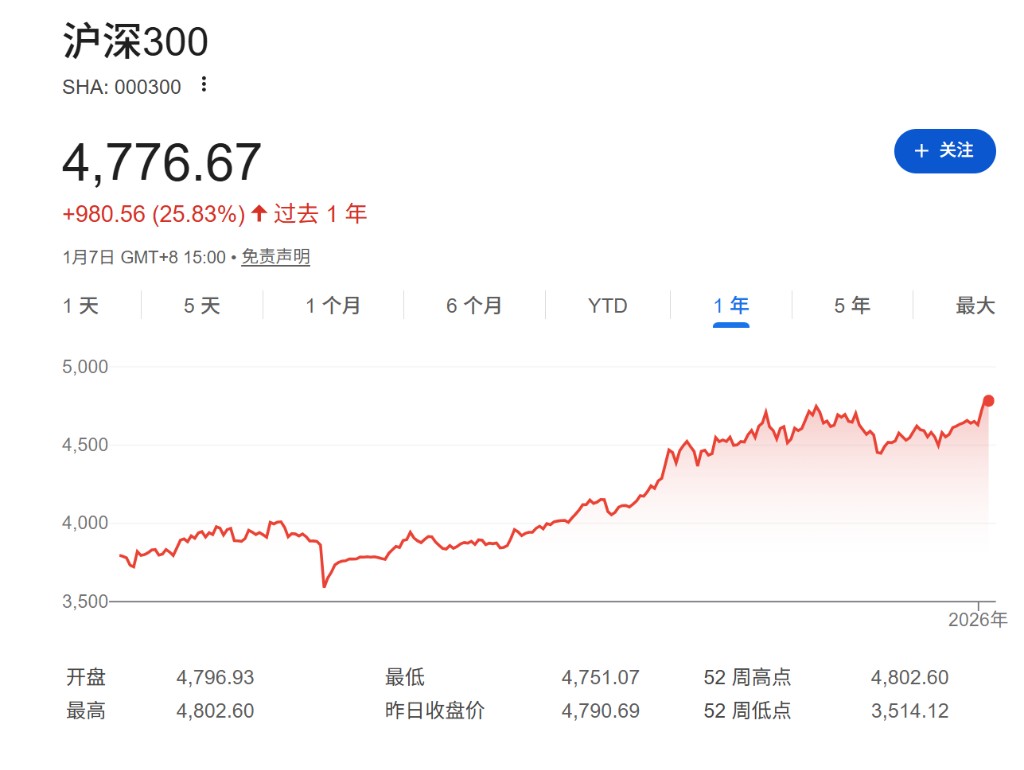
Goldman Sachs is bullish on the Chinese stock market in 2026, expecting MSCI China and CSI 300 to rise by 20% and 12% respectively. The market is shifting from valuation recovery to profit-driven growth, with corporate profits expected to accelerate from 4% to 14% driven by AI commercialization, overseas expansion, and anti-involution policies, while TMT profit growth is around 20%. The capital situation is strong, with southbound capital potentially reaching USD 200 billion, and domestic reallocation may bring an additional RMB 3 trillion

Goldman Sachs issued a strong bullish signal for the Chinese stock market in its latest 2026 China Market Outlook report. The bank expects that driven by accelerated corporate earnings growth, the MSCI China Index and the CSI 300 Index will rise by 20% and 12% respectively in 2026, continuing to maintain an "overweight" recommendation for A-shares and H-shares.

According to news from the Wind Trading Desk, the team led by Goldman Sachs' Chief China Equity Strategist Liu Jinjun pointed out in a report released on the 7th that after a year of valuation recovery, the upward momentum of the market in 2026 will mainly shift to earnings-driven. The bank predicts that benefiting from artificial intelligence (AI), corporate overseas expansion, and anti-involution policies, the profit growth rate of Chinese listed companies will significantly accelerate from 4% in 2025 to 14%. In particular, the TMT (Technology, Media, and Telecommunications) sector is expected to see profits grow by about 20% driven by the monetization of AI and increased capital expenditures.

In terms of capital flows, the report forecasts that the net inflow of southbound funds will reach a new record of $200 billion in 2026; at the same time, domestic asset reallocation may bring about 3 trillion yuan of incremental funds to the stock market. Additionally, with the advancement of repurchase policies and improvement in corporate cash flows, the total dividends and repurchases for the year are expected to reach nearly 4 trillion yuan, providing investors with substantial cash returns.

Regarding market valuation, Goldman Sachs believes that the current price-to-earnings ratio of 12.4 times for the MSCI China Index is at a mid-cycle level, which is reasonable relative to its macro forecasts. However, the bank emphasizes that considering the commercialization of AI, more proactive fiscal stimulus, and potential liquidity overshooting, the market still has very attractive upside potential.

Earnings-Driven: AI and Overseas Expansion as Dual Engines

Goldman Sachs clearly states that "without earnings, there are no returns" will be the main theme of the market in 2026. After experiencing a 20%-30% increase in 2025 mainly driven by valuation expansion, future market performance will heavily rely on earnings realization. Goldman Sachs predicts that the earnings growth rates of the MSCI China and CSI 300 indices will accelerate to 14% in 2026 and 2027, far exceeding the single-digit level of 2025.

This optimistic forecast is primarily based on three core driving forces: artificial intelligence, overseas expansion strategies, and anti-involution policies. Goldman Sachs is particularly bullish on the TMT sector, expecting that profits in the internet and hardware industries will grow by about 20% due to advancements in AI monetization and increased capital expenditures. Furthermore, despite potential trade frictions, Goldman Sachs believes that Chinese exports will still maintain growth in 2026, especially as industry leaders with global competitiveness will continue to benefit from high profit margins in overseas markets.

In terms of industry allocation, Goldman Sachs recommends that investors focus on the "Top 10 Outstanding Chinese" companies, which are well-positioned in a relaxed regulatory environment and breakthroughs in AI technology. At the same time, Goldman Sachs upgraded the hardware technology sector to "overweight," believing it to be a key beneficiary of AI development and the self-sufficiency strategy

Capital Market: Southbound Funds May Reach Historical Highs

Goldman Sachs holds an optimistic view on the capital market for 2026, expecting multiple sources of long-term funds to continue flowing into the Chinese market. Among them, southbound funds are seen as a key force, with an expected net purchase amount reaching USD 200 billion for the year, setting a new historical high. This is mainly attributed to the expansion of the investment scope of southbound trading, the A/H share premium remaining at a high level of 37%, and the attractive dividend yield of the Hong Kong stock market for onshore investors (the Hang Seng China High Dividend Yield Index yield reaches 5.7%).

In addition to southbound funds, the asset reallocation of domestic institutional investors will also be an important source of incremental capital. Goldman Sachs estimates that as the risk-free interest rate declines, the demand for high-dividend equity assets from long-term funds such as insurance and pensions may drive approximately RMB 3 trillion of domestic funds to shift towards the stock market. At the same time, as global mutual funds narrow their underweight position in Chinese stocks, every 100 basis points of position recovery could bring about USD 16 billion in buying demand.

Corporate buyback actions also constitute a strong financial support. Goldman Sachs expects that, driven by policy and supported by robust operating cash flow, the buyback scale of Chinese listed companies may grow by 20% in 2026, and combined with dividends, the total return to shareholders for the year may approach RMB 4 trillion.

Industry Allocation: AI Changes the Game

Goldman Sachs maintains an overweight rating on internet/media entertainment, online retail, technology hardware (upgraded from neutral to overweight), materials, and insurance. The technology hardware sector covers multiple product supply chains, and Goldman Sachs' technology analysts are optimistic about smartphones, AI servers/data centers (including cooling systems), semiconductors, and physical AI applications (such as robotics), but hold a selective attitude towards personal computers.

Goldman Sachs states that internet and retail platform companies are building a complete AI ecosystem, covering semiconductors, large language models, data centers, and AI applications. The losses from food delivery subsidies are expected to ease in 2026, and the upward trend in AI capital expenditures may enhance profitability. Compared to their American counterparts, the growth and valuation trade-offs of these companies appear quite attractive, with an expected price-to-earnings growth ratio of only 0.5.

The insurance sector has seen improvements in premium growth in the second half of 2025 and may further benefit from the trend of cash shifting to investments driven by declining real interest rates. Stabilizing bond yields and positive beta values in stocks may boost investment returns, with current valuations still attractive, expecting a price-to-earnings ratio of 7.1 times and a price-to-book ratio of 1.0 times.

New infrastructure and AI investments are becoming new contributors to growth. Anti-involution policies have slightly improved the pricing environment in certain sub-industries with prominent overcapacity issues. Goldman Sachs' commodity strategists remain optimistic about precious metals, especially gold.

Valuation and Policy: Risk Premium Still Has Room to Decline

Despite the significant rebound in the Chinese stock market over the past year, Goldman Sachs believes that current valuations remain attractive. The dynamic price-to-earnings ratios of the MSCI China Index and the CSI 300 Index are 12.4 times and 14.5 times, respectively, near the cycle median. However, compared to global markets, the MSCI China Index still has discounts of 38% and 11% relative to developed markets and emerging markets excluding China, respectively Goldman's macro model shows that the year-end target price-to-earnings ratio for the MSCI China Index is 13 times, and for the CSI 300, it is 15 times. This indicates that the current market prices have not fully accounted for the right-tail options brought by AI, potential policy stimulus, and the possibility of liquidity overshoot. Goldman points out that the equity risk premium (ERP) in the A-share market remains relatively high, and with the decline in domestic risk-free interest rates, there is still room for further compression of the ERP, which will drive valuation increases.

On the policy front, Goldman believes that 2026, as the starting year of the "14th Five-Year Plan," will continue to maintain a market-friendly stance. In addition to support from monetary and fiscal policies, the regulatory attitude towards the private economy will remain accommodative, and the strategic importance of the stock market as a venue for resource allocation and wealth creation will continue to increase. These factors will provide policy guarantees for the stable operation of the stock market