


Strong start to the New Year! AI demand combined with tightening supply leads to a collective rebound in storage chips

Driven by the expansion of AI infrastructure, storage chips continue to rise in price due to strong demand and supply shortages, propelling a strong rebound in the global semiconductor sector. The market expects the industry to enter a new structural growth cycle defined by AI demand. This round of price increases has spread from storage manufacturers to the entire industry chain, including foundries and equipment, reflecting a market-wide optimistic consensus on the long-term investment in AI computing power
Driven by the continuous expansion of artificial intelligence infrastructure construction, strong demand and supply bottlenecks have jointly pushed up the prices of storage chips, not only leading to a strong rebound in the global semiconductor sector at the beginning of the new year but also triggering strong expectations for a structural growth cycle in the industry.
After a significant increase in 2025, the supply shortage of storage chips, which are key components for AI model training and operation, has not eased. According to data from Counterpoint Research, the price of dynamic random-access memory (DRAM) is expected to rise another 40% before the second quarter of 2026. This trend has directly boosted the stock performance of industry giants, with South Korea's SK Hynix and Samsung rising 11.5% and 15.9% respectively so far this year, while Micron Technology's stock price has also climbed 9%.
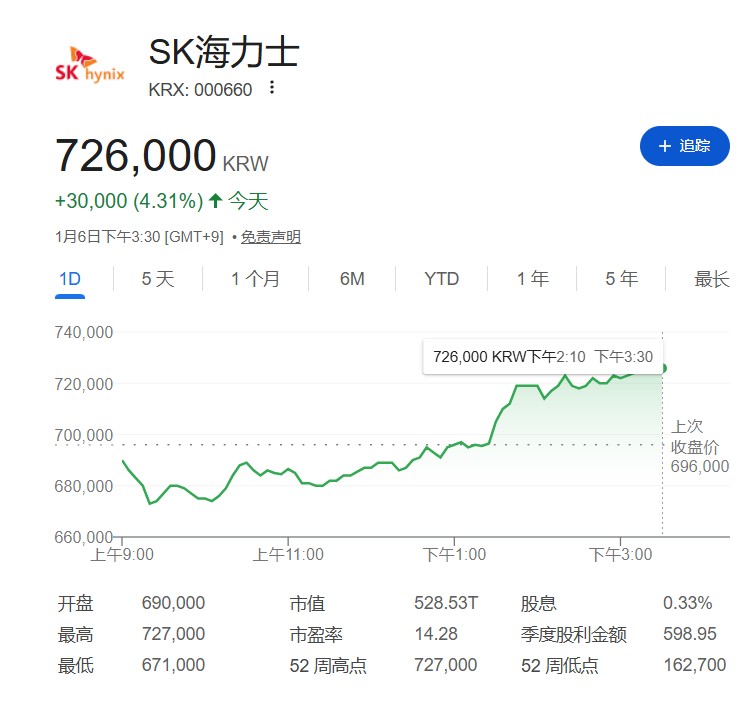
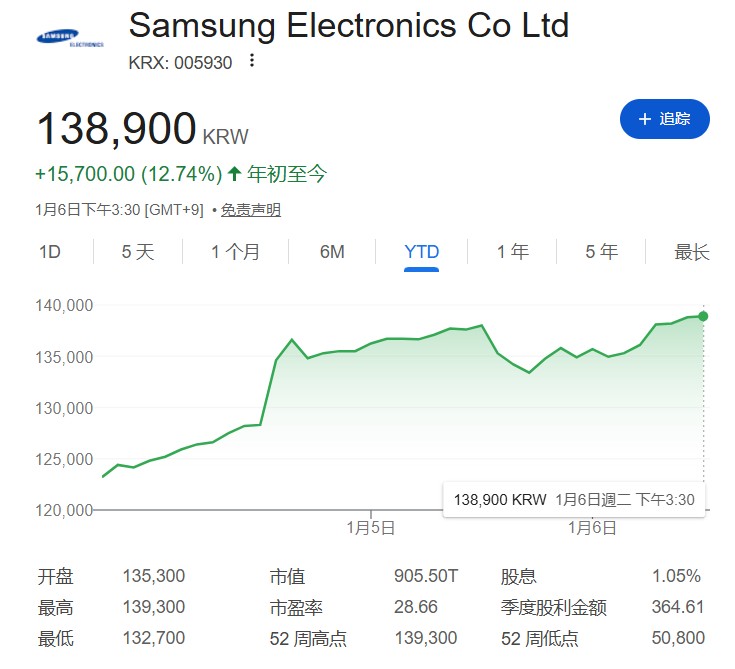
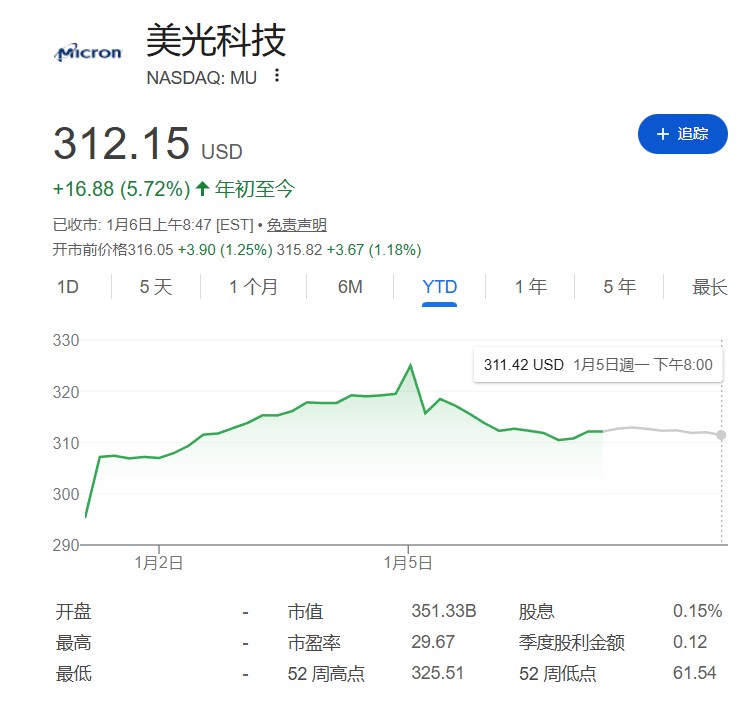
This rebound is not limited to storage chip manufacturers; the upward trend has spread to a broader semiconductor supply chain. The market generally expects that as tech giants continue to spend billions of dollars on chip procurement and building AI data centers, the supply-demand imbalance of core components such as high-bandwidth memory (HBM) will grant related companies stronger pricing power. Investor sentiment is optimistic, anticipating that major chip manufacturers will report significantly soaring profits in the upcoming earnings season.
In addition, this positive momentum has also boosted the foundry and equipment manufacturing sectors. The stock prices of Intel, Taiwan Semiconductor, and lithography machine giant ASML have all recorded significant gains in the new year. Analysts point out that this is not a short-term market rebound but a structural change linked to the long-term construction of AI infrastructure, indicating that the storage industry, represented by DRAM, may usher in a super cycle.
Performance Explosion Expectations Driven by AI
Ben Barringer, head of technology research at Quilter Cheviot, pointed out in an interview with CNBC that the recent rebound in the semiconductor sector is mainly driven by the storage market rather than logic chips. He emphasized that this is the result of extremely strong demand from AI workloads combined with relatively limited supply of high-bandwidth memory (HBM), which is essential for training and running large AI models.
This supply-demand pattern is seen as a significant boon for Samsung, SK Hynix, and Micron Technology. Given that there are no signs of demand slowing down, these three giants are expected to further increase the prices of their storage chips. The market has high hopes for their upcoming fourth-quarter financial reports. According to LSEG estimates, Samsung's operating profit for the fourth quarter is expected to soar by 140%. Meanwhile, analysts expect Micron Technology's earnings per share to explode by over 400% year-on-year in the quarter ending in December
The Rebound Effect Spreads Across the Entire Industry Chain
The strong performance of storage chip stocks has created a spillover effect, benefiting the entire semiconductor supply chain. Investors are betting that strong AI demand in 2025 will continue this year, driving up the stock prices of other key players. The world's largest semiconductor manufacturer, Taiwan Semiconductor, has seen its stock price rise nearly 10% this year, while Intel's stock price has increased by nearly 7%, with both companies viewed as beneficiaries of the ongoing AI boom.
The performance of Dutch lithography giant ASML has been particularly impressive, with its stock price rising nearly 14% this year. ASML designs and manufactures the critical machines needed to produce the world's most advanced chips. Bernstein raised ASML's target price from €800 to €1,300 in a report on Sunday, indicating about a 24% upside from Tuesday's trading price.
Structural Transformation and the "Super Cycle"
Bernstein analysts pointed out that ASML will greatly benefit from the planned large-scale capacity expansion in 2026 and 2027, especially with the upcoming "DRAM super cycle." Analysts expect that storage chip manufacturers like Samsung will increase capacity, which will directly benefit ASML, as manufacturing more advanced storage chips relies on the tools it provides.
Ben Barringer from Quilter Cheviot added that SK Hynix's recent comments about a potential HBM super cycle further reinforce the market view: this is not just a short-term rebound, but a structural transformation closely related to the ongoing AI infrastructure development. This trend has significantly improved the sentiment across the entire industry, especially for companies that directly benefit from AI-driven storage demand
