UBS: Volatility has surged significantly, be cautious of a short-term correction in gold, recently benefiting from the ride of "platinum, silver, and palladium."

UBS warns of short-term correction risks for gold, with gold volatility soaring to levels seen during the Russia-Ukraine conflict, and a breakdown in its relationship with real interest rates weakening its safe-haven appeal. The gold-silver ratio has dropped to around 65, and historical data shows weak subsequent performance. However, UBS maintains a long-term bullish outlook, supported by central banks' continued gold purchases, stable ETF inflows, diversified demand, and undervaluation of gold mining stocks
UBS has sent a clear signal to investors: while the long-term bullish target for gold remains unchanged at $4,750 per ounce, and gold prices have achieved half of that target's increase over the past two months, short-term alarms have been raised.
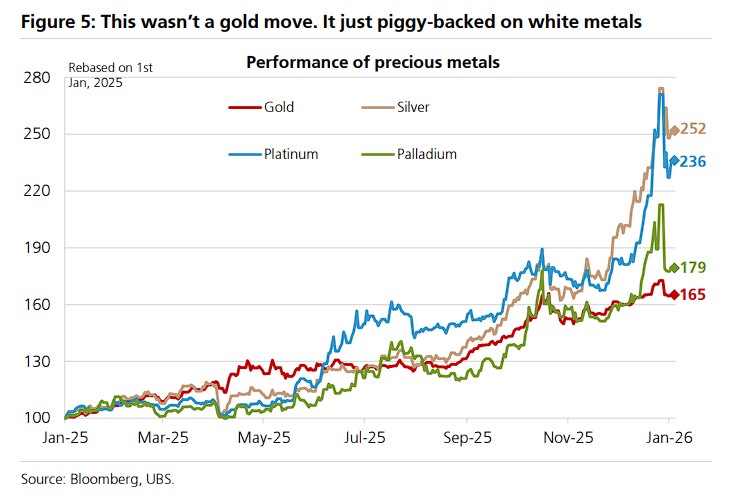
On January 6th, according to the Wind Trading Desk, UBS's global macro strategy team stated in their latest research report that the "quality" of the recent rise in gold prices is insufficient. The rally in December was not driven by independent positive factors for gold itself, but rather was simply "riding the coattails of the surges in silver, platinum, and palladium."
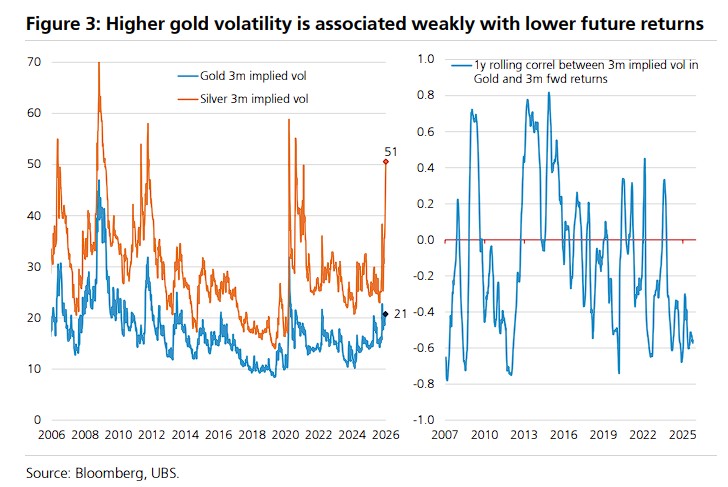
The bank particularly emphasized that what is more concerning is that the volatility of gold has surged to levels seen at the onset of the Russia-Ukraine conflict, and this high volatility is undermining gold's appeal as a "safe haven" in private investment portfolios.
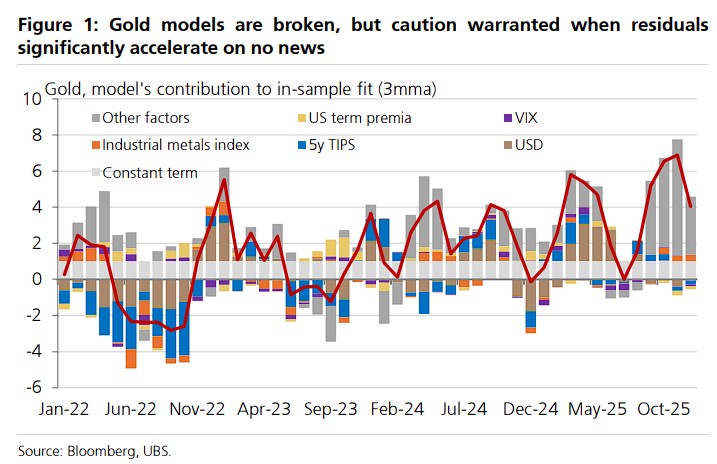
Models show that the relationship between gold and real interest rates has broken down, and in the absence of new stimulus news, the residuals have significantly accelerated, which is typically a precursor to a pullback.
The report pointed out that despite this, given the buying from global central banks, diversification demand, ETF inflows, and the lagging valuations of gold mining stocks, UBS maintains its long-term bullish view, and the conditions for a significant drop (over 20% decline) are not present.
Model Failure and Soaring Volatility: The Biggest Short-Term Enemy
The report noted that since the Russia-Ukraine conflict led to the freezing of the Russian central bank's reserves, traditional gold pricing models have "broken down."

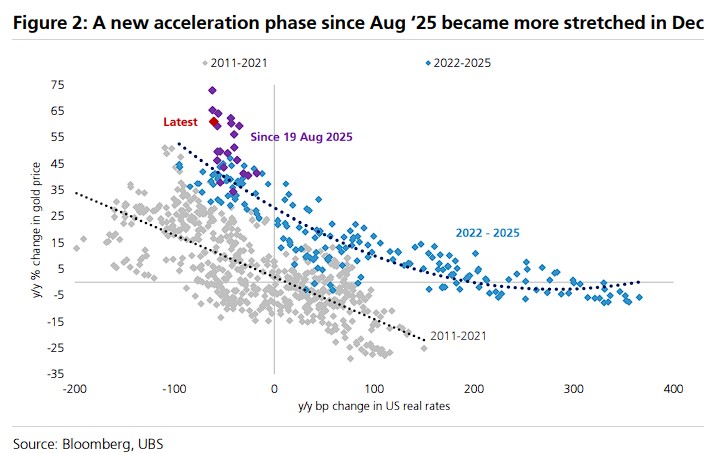
Prior to this, gold had a strong negative correlation with U.S. real interest rates—a 100 basis point change in real interest rates typically leads to an inverse movement in gold prices of about 12-14%.
However, since August 2025, despite real interest rates not significantly declining, gold prices have accelerated without any fundamental news support, and this divergence from fundamentals became particularly extreme in December 2025.

The bank stated that for investors, the biggest risk lies in volatility. Current gold volatility has returned to levels seen at the outbreak of the Russia-Ukraine conflict. Historical data analysis shows that high volatility is often associated with low future returns. The implied volatility of gold over three months has risen from 21 to 51.
UBS pointed out that the greatest potential for gold's rise comes from its allocation in private portfolios, but private investors are averse to high volatility. If gold is no longer just a safe-haven asset but turns into a high-volatility asset, its attractiveness in asset allocation will be significantly diminished.
"Free-Riding" Market: The Real Stars are Silver and Platinum Group Metals
Regarding the gold market in December, Joni Teves, a strategist from UBS Global Macro Team, pointed out in a research report: "Gold's fluctuations in December are merely hitching a ride on the significant volatility of white metals."

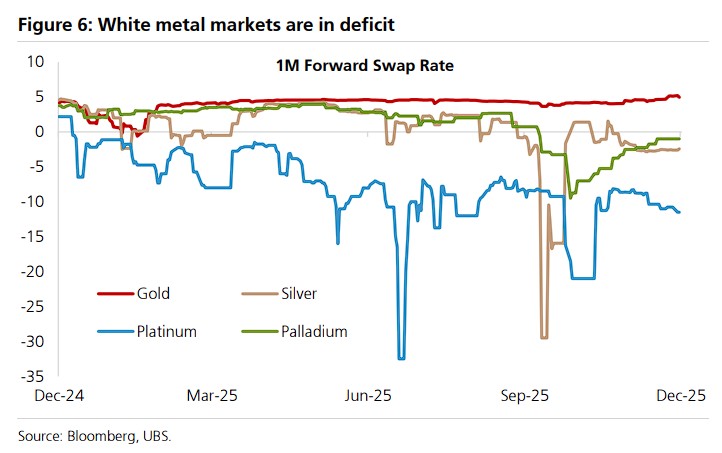
The bank believes that the real supply shortages, liquidity scarcity, and explosive price increases are occurring in platinum, silver, and palladium. The inverted forward curve proves the extreme scarcity in the spot markets for these metals.

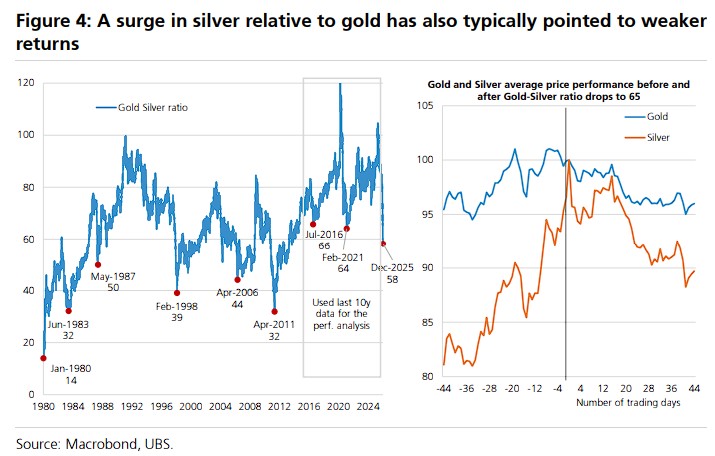
A key technical indicator is the Gold-Silver Ratio, which has currently dropped to around 65. Data from the past 10 years shows that whenever this ratio falls to around 65, the average performance of gold and silver over the following three months tends to be weak.
Similar historical situations occurred in January 1980, June 1983, May 1987, February 1998, April 2006, April 2011, July 2016, and February 2021.

UBS also stated that when investors start to frantically chase silver as a "high beta" trade, it often signals that the market is overheated and needs to cool down.
Long-Term Logic Remains Unchanged: It's Not Time for a "Great Retreat"
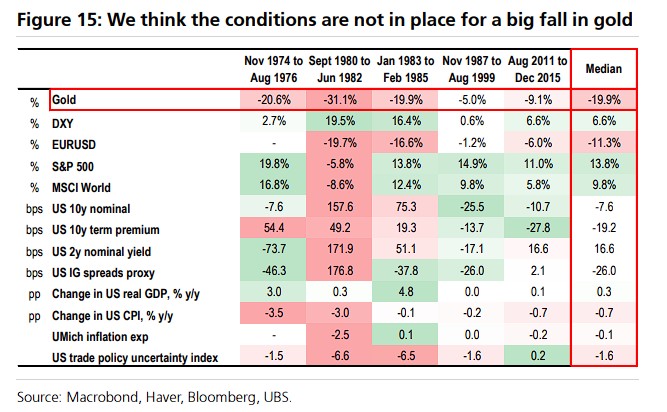
Despite facing short-term correction risks, UBS believes that the conditions for a significant decline are not yet in place. The bank analyzed the common characteristics during historical periods of significant gold declines (close to 20%) and found that these periods are usually accompanied by a substantial decrease in stock market volatility and credit spreads, a decline in inflation, and a significant appreciation of the dollar.

However, UBS expects the opposite situation to occur in the next 3-6 months, thus maintaining a bullish position on gold. At the same time, UBS emphasizes that the long-term upward trend for gold has not ended, and the target price of $4,750 per ounce remains valid, primarily based on the following supporting points:
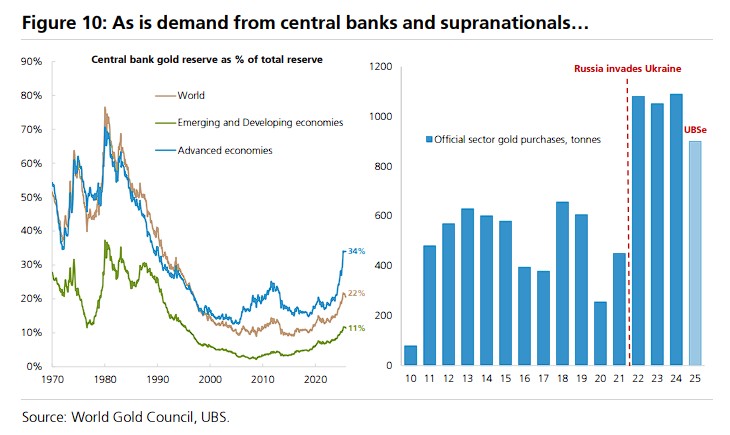
Central Bank Buying: Although central banks in developed countries hold a large amount of gold, the gold reserves of emerging market central banks only account for 7-11% of their total reserves. While they may not purchase as aggressively as recently, they will continue to buy during corrections, providing support for gold prices.
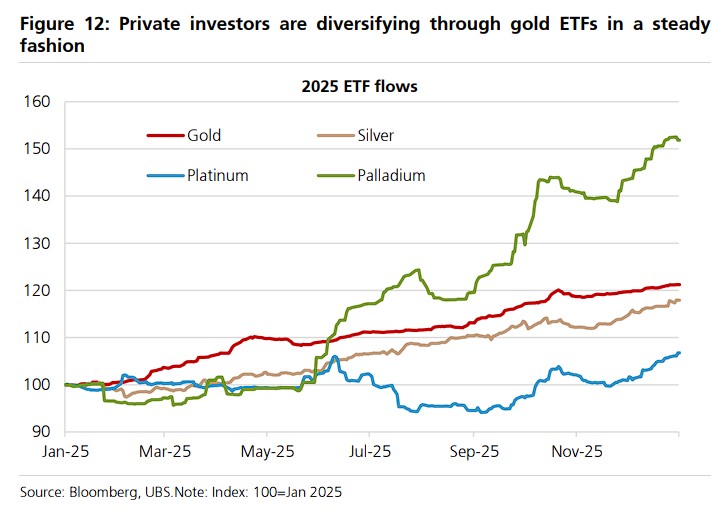
Stable Inflows into ETFs: In 2025, the inflow of funds into gold ETFs is expected to maintain steady growth. UBS stated that despite gold prices reaching a historical high in December, there was no significant surge in purchases, indicating that investors are diversifying through gold ETFs in a prudent manner.
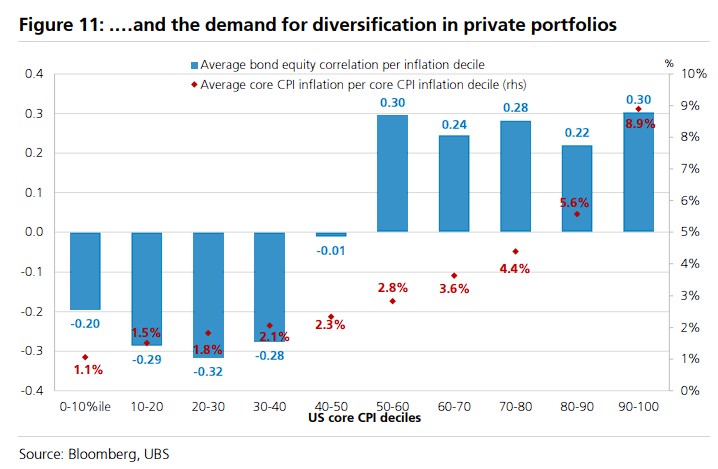
Diversification Demand: The bond-stock correlation data shows that when the U.S. core CPI is at a high range, the correlation turns positive (reaching as high as +0.30). Gold is one of the few assets that can diversify risk.
UBS expects the positive correlation between bonds and stocks to persist until U.S. core inflation sustainably falls below 2.6%. In the next six months, UBS anticipates inflation will rise to an annualized level of 3.5%, which will maintain demand for gold.
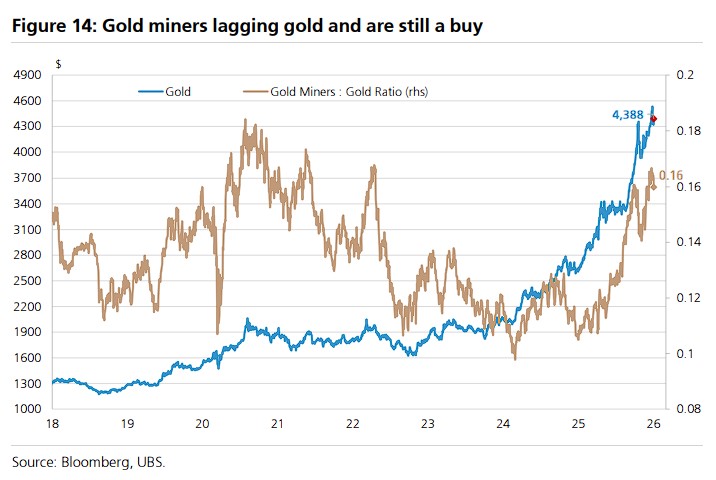
Gold Mining Stocks Severely Undervalued: Investors are more inclined to hold physical gold rather than mining company stocks, leading to a significant lag in the performance of gold mining stocks. Currently, the pricing of gold mining stocks implies a gold price of only about $3,600 per ounce, representing a huge discount compared to the spot gold price, making it a good buying opportunity.