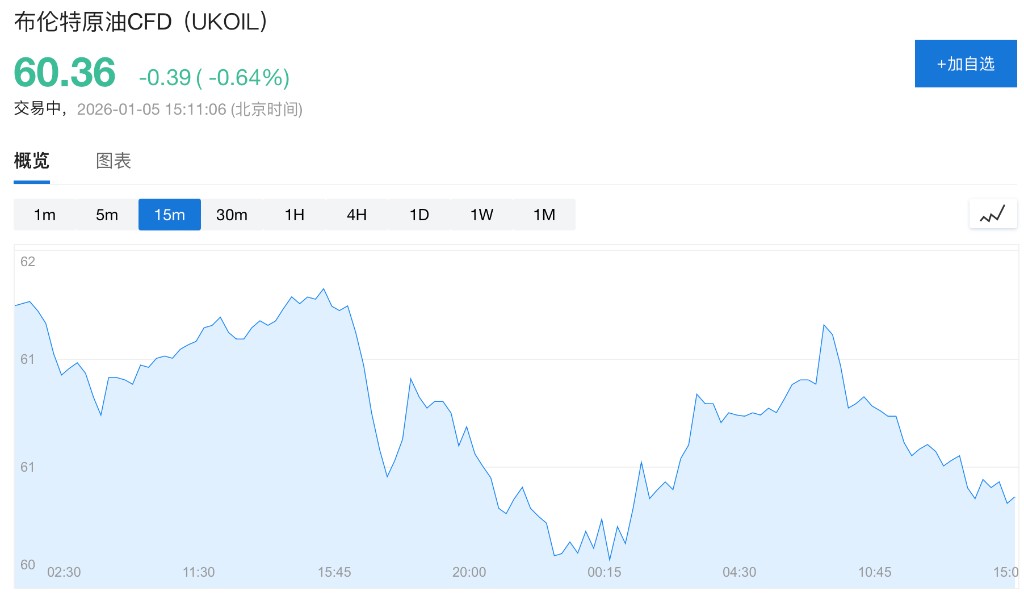
AI boosts global stock markets, U.S. index futures rise collectively, gold and silver both increase amid turmoil in Venezuela, while crude oil unexpectedly declines

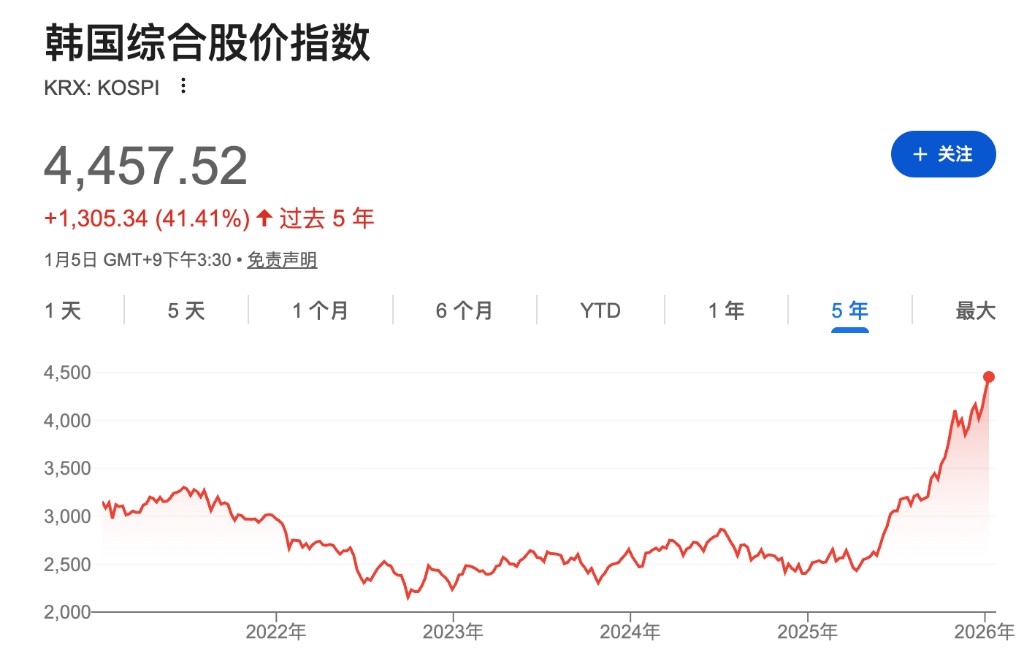
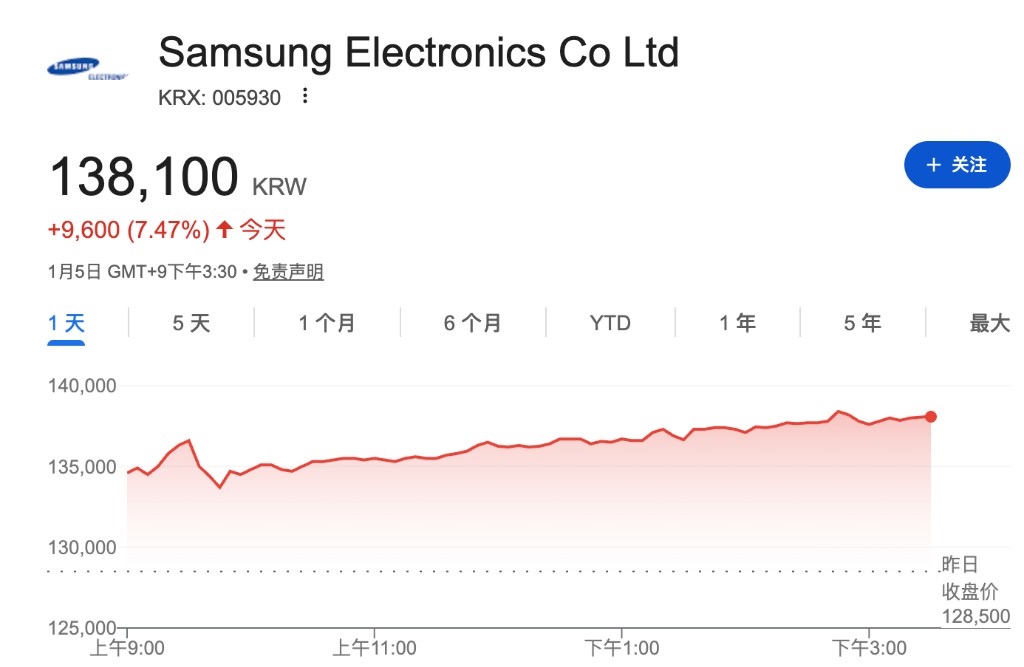
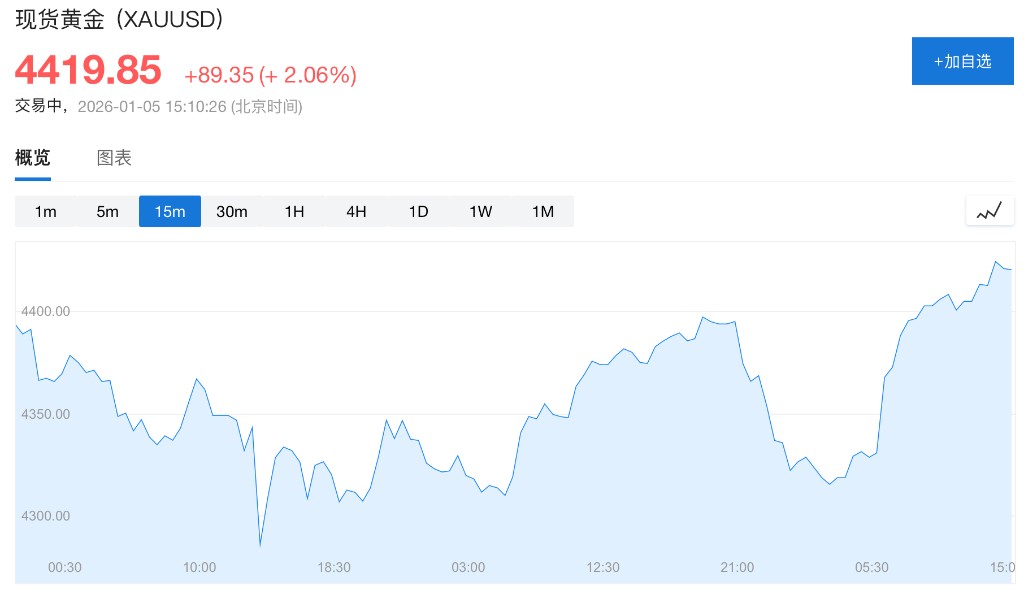
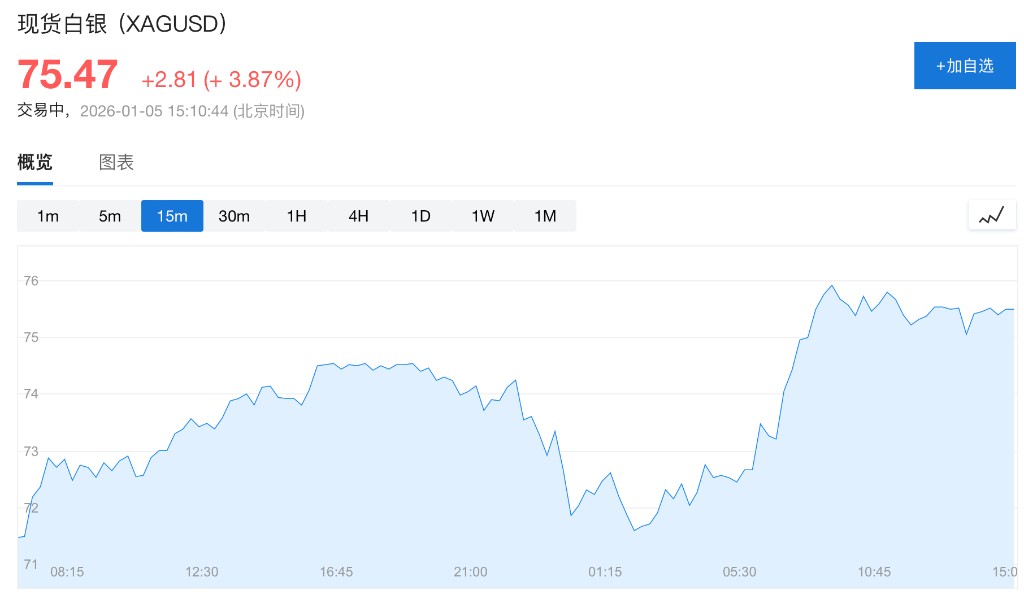
Boosted by optimistic sentiment towards artificial intelligence, U.S. stock index futures rose collectively, and Asian stock indices all increased, with the South Korea Composite Index closing up 3.43%, setting a new all-time high. Samsung Electronics surged 7%. The geopolitical situation in Venezuela has led to a rise in risk aversion, causing precious metals to rise across the board, with spot gold climbing above $4,400 and spot silver increasing nearly 4%. Crude oil fell due to record oversupply, with Brent crude oil dropping over 0.6%
Optimism surrounding artificial intelligence has overshadowed market concerns about the situation in Venezuela, leading to a continued rise in global stock markets. Asian stocks performed notably well, with the Seoul Composite Index reaching a historic high. Meanwhile, geopolitical tensions have increased risk aversion, causing precious metals to rise across the board, while oil unexpectedly fell due to a record oversupply globally.
On January 5th, U.S. stock index futures rose collectively, European stocks opened higher, and Asian stock indices all increased. The U.S. dollar strengthened, U.S. Treasury yields fell, and Japanese bonds came under pressure. Gold and silver both rose, oil prices declined, and cryptocurrencies increased.
Market analysts generally believe that the AI-driven technological optimism remains the dominant force in the current market, and while geopolitical risks may temporarily disturb safe-haven assets, their impact on overall risk appetite has been quickly absorbed by the market. Charu Chanana, Chief Investment Strategist at Saxo Bank, stated:
“Artificial intelligence is still the main driving force in the market. The optimism in technology continues to overshadow any other factors in the market.”
Dilin Wu, a strategist at Pepperstone Group Ltd., remarked:
“The geopolitical noise dissipates quickly. The sudden escalation in Venezuela has not had a substantial impact on global risk assets, further confirming that the market tends to briefly price in geopolitical shocks and quickly digest them.”
Core market movements are as follows:
Dow futures rose nearly 0.1%, S&P 500 futures increased by 0.17%, and Nasdaq futures rose over 0.4%.
The Euro Stoxx 50 index rose by 0.73%, the UK FTSE 100 index increased by 0.59%, the French CAC40 index rose by 0.63%, and the German DAX30 index increased by 0.62%.
The Nikkei 225 index closed up 3% at 51,832.80 points; the Tokyo Stock Exchange index closed up 2% at 3,477.52 points; the Seoul Composite Index closed up 3.43% at 4,457.52 points, setting a new closing historical high. Samsung Electronics surged by 7%.
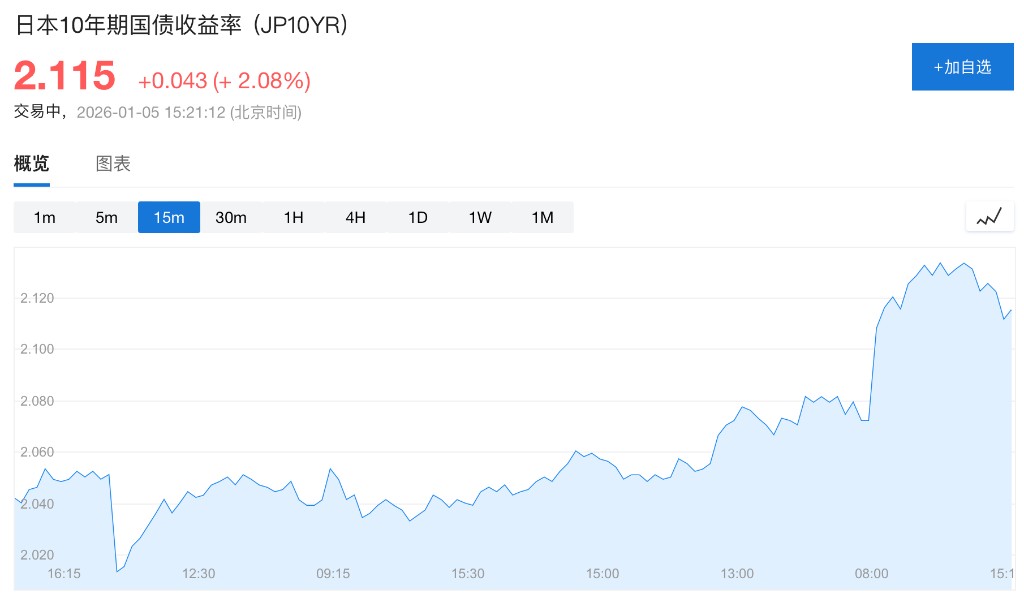
The yield on the 10-year U.S. Treasury bond fell by 1 basis point to 4.18%; the yield on the 10-year Japanese government bond rose by 6 basis points to 2.120%.
The U.S. dollar index rose by 0.2%; the euro fell by 0.2% to $1.1691; the yen depreciated by 0.1% against the dollar to 157.07 yen.
Spot gold's intraday gain expanded to 2%, priced at $4,419.7 per ounce; spot silver rose nearly 4% to $75.47 per ounce; Brent crude oil fell over 0.6%.
Bitcoin rose by 1.3% to $92,413.59; Ethereum's price increased by 0.3% to $3,153.53.
U.S. stock index futures rose collectively, with the Nasdaq up over 0.4%. Anna Paulson, President of the Federal Reserve Bank of Philadelphia, stated that if the economic outlook remains robust, there may be room for a moderate further rate cut later in 2026, but this expectation is highly dependent on the evolution of subsequent data.
Key economic data will also influence market movements in the coming week. In addition to the employment report for December, the U.S. Bureau of Labor Statistics will release data on job vacancies, resignations, and layoffs for November on Wednesday. The Institute for Supply Management's survey of manufacturing and service sector suppliers for December will also provide clues about employment conditions in these industries This weekend, the U.S. government will release the housing starts data for October, while the University of Michigan will publish the preliminary consumer confidence index for January.

South Korean stocks opened high and continued to rise, with the Korea Composite Stock Price Index closing up 3.43%, setting a new all-time high. The heavyweight stock Samsung Electronics surged nearly 7.5% to reach a historical high, while SK Hynix also strengthened, rising nearly 3%. The strong performance of these two storage giants directly boosted market sentiment.
According to Wallstreetcn, the key logic supporting this round of market rally lies in the dramatic fluctuations in memory chip prices. Meanwhile, the competition for high bandwidth memory (HBM) capacity has entered a heated phase.
In addition, TSMC announced that the 2nm process will enter mass production as scheduled, further boosting market sentiment. Analysts generally believe that the AI boom will continue until 2026, and institutions like Morgan Stanley have significantly raised their expectations for memory prices. Asian tech stocks are benefiting from strong support from industry fundamentals and continuous capital inflows.
According to Wallstreetcn, under the dual concerns of fiscal expansion and intensified inflationary pressures, Japanese government bonds are facing selling pressure, and long-term government bond yields have risen significantly. The benchmark 10-year Japanese government bond yield rose by 5 basis points to 2.12%, reaching its highest level since 1999.
The U.S. raid on Venezuela has triggered a geopolitical shock, with safe-haven sentiment pushing gold prices back above $4,400, and spot silver rising nearly 4% to around $76 per ounce. Platinum and palladium also rose, with New York platinum increasing by over 4%.
Market analysts point out that at the onset of a geopolitical crisis, funds often quickly withdraw from risk assets and shift to precious metals with safe-haven attributes. U.S. Secretary of State Rubio's remarks about the U.S. using its oil influence to force Venezuela to make changes further exacerbated market concerns about the complexity of the regional situation, thereby supporting the trend in gold prices
Crude oil has not followed the traditional "war premium" logic; global crude oil supply is set to reach a record surplus, and Venezuela's production, accounting for less than 1%, is unlikely to shake the situation, with Brent crude oil falling over 0.6%.
According to Wallstreetcn, the Trump administration plans to revive Venezuela's oil industry, but rebuilding the country's oil infrastructure and restoring its production to peak levels is expected to require an annual investment of about $10 billion over the next decade, with total costs potentially exceeding $100 billion.
According to media reports citing informed sources, Venezuela's oil infrastructure has not been affected by a series of attacks launched by the U.S. in Caracas and other states. They stated that key facilities, including Jose Port, Amuay Refinery, and Orinoco Oil Field, are still operating normally.