Market reaction to the changes in Venezuela: Oil prices "fall instead of rising," gold leads precious metals higher

Wallstreetcn
2026.01.05 00:07
portai
I'm PortAI, I can summarize articles.

The U.S. raid on Venezuela has triggered a geopolitical shock, with safe-haven sentiment driving gold prices up to $4,370, spot palladium rising over 3%, and silver soaring 1.7%. However, oil prices unexpectedly fell—analysts pointed out that global supply will reach a record surplus, with Venezuela's production accounting for less than 1%, making it difficult to change the overall situation. Trump announced a deep intervention in the Venezuelan oil industry, calling for U.S. companies to invest in reconstruction, but industry insiders warned that restoring supply amid political turmoil could be a long and difficult process

After the United States took military action in Venezuela and captured the country's leader, Nicolás Maduro, the global financial markets showed significant divergence. Investors quickly flocked to precious metals seeking safe havens, pushing gold and silver prices to reverse their previous declines, while the oil market displayed an unusual "calm" in response to this geopolitical shock due to the backdrop of global supply surplus.

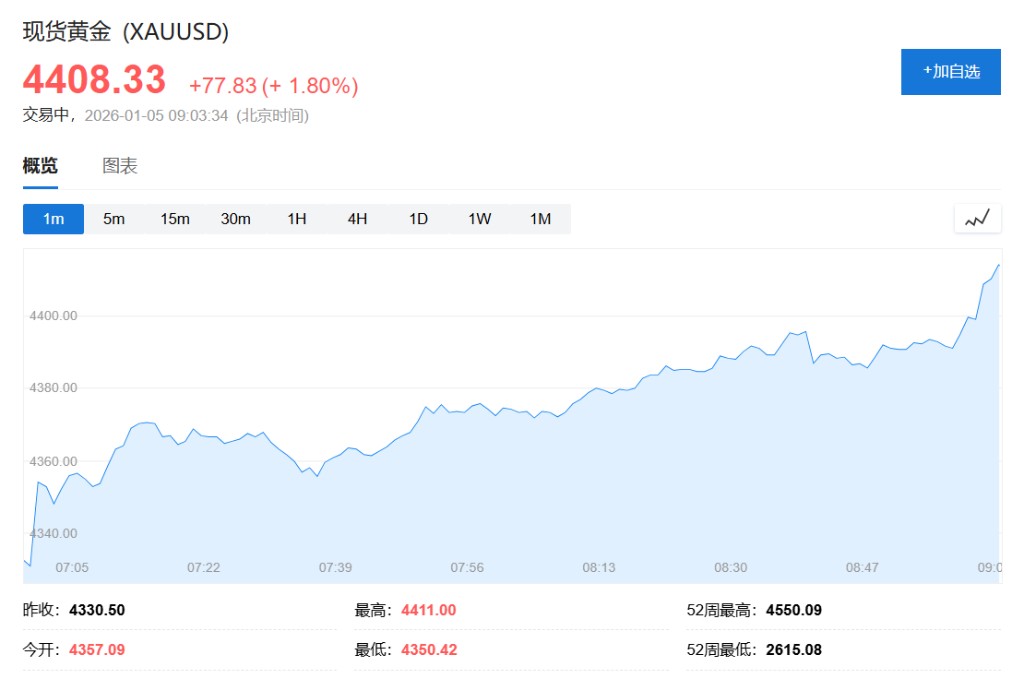
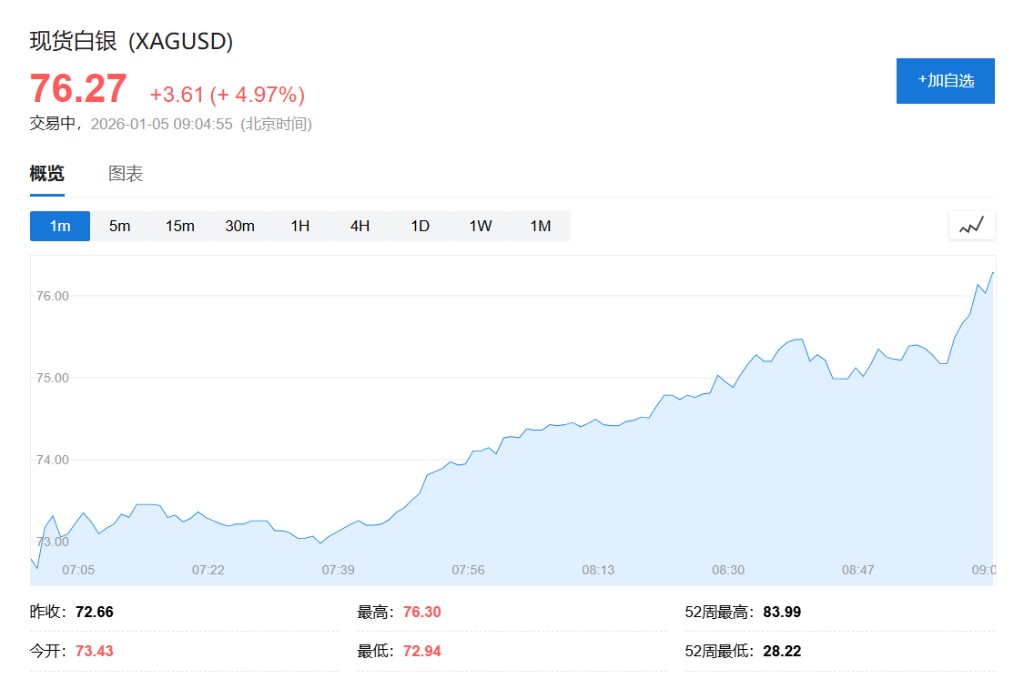
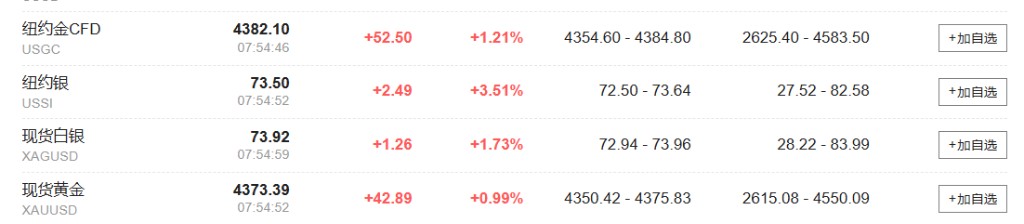
On Monday, January 5th, spot gold prices rose nearly 1% in early trading, climbing to around $4,370 per ounce, after a 4.4% drop in the previous week. Silver prices surged 1.7% to around $74 per ounce, with platinum and palladium also rising in tandem, as spot palladium increased by over 3%. The market's instinctive reaction to geopolitical uncertainty made precious metals a safe haven for funds once again.

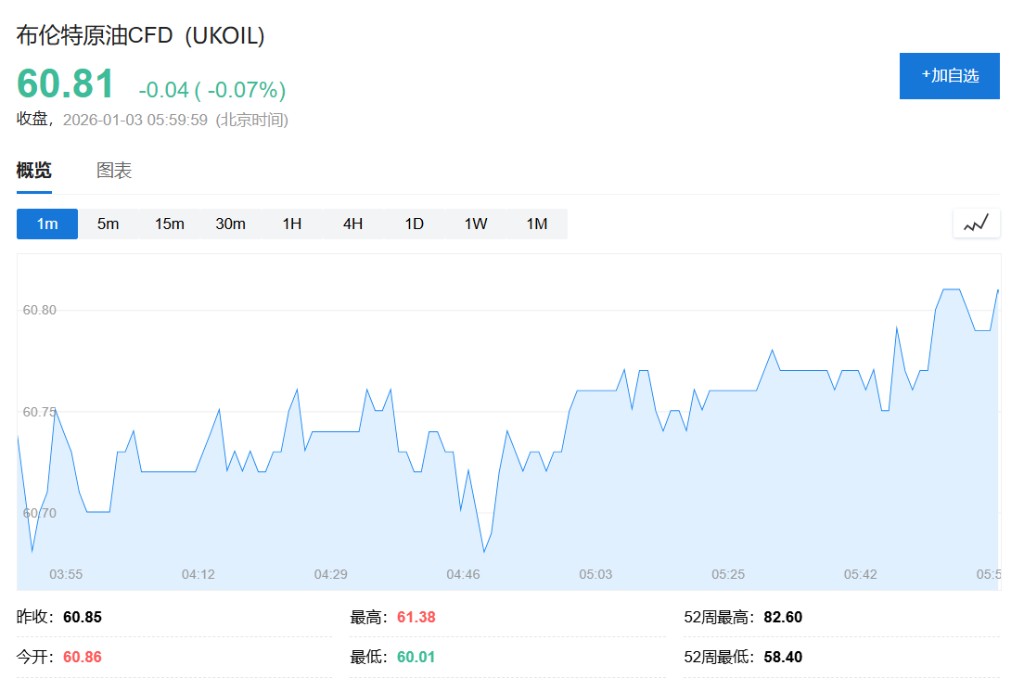
Meanwhile, the oil market's response did not follow the traditional "war premium" logic, instead showing a decline. Despite President Trump confirming that U.S. military forces carried out large-scale strikes, the International Energy Agency (IEA) predicted a record surplus in global oil supply by 2026, and given Venezuela's current production is a very small percentage of the global total, the market generally believes this event is unlikely to change the overall loose supply-demand dynamics in the oil market, and oil prices did not experience panic-driven surges.

According to reports from Xinhua News Agency and CCTV News, on January 3rd at noon local time (January 4th at midnight Beijing time), President Trump and Defense Secretary Mark Esper held a press conference at Mar-a-Lago in Florida regarding the U.S. military's actions against Venezuela, capturing President Maduro and transferring him out of the country. Trump stated that U.S. forces used air, land, and sea power in the operation, and that "all military forces in Venezuela have lost their combat capability." Trump claimed that the U.S. would "manage" Venezuela until a "safe" transition is implemented Trump stated that he watched in real-time as U.S. special forces captured Maduro, calling it like watching a "TV show," seeing "every detail." Trump also told U.S. media that the U.S. would deeply intervene in Venezuela's oil industry.

Rising Risk Aversion Boosts Precious Metal Prices

The severe geopolitical turmoil directly stimulated investors' risk aversion nerves. Following the news of U.S. military action, the precious metals market reacted swiftly. After a week of decline, gold prices rebounded strongly, returning to above $4,370 per ounce.

Spot silver surged 1.7%, currently reported at nearly $74.

In addition to gold and silver, platinum and palladium also rose across the board. Among them, spot palladium rose over 3%, reaching $1,689.08 per ounce.

Market analysts pointed out that at the onset of geopolitical crises, funds often first withdraw from risk assets and shift to precious metals with safe-haven attributes. U.S. Secretary of State Rubio's remarks about the U.S. using its oil influence to force Venezuela to make changes further exacerbated market concerns about the complexity of the regional situation, thereby supporting the gold price trend.

Oversupply Expectations Suppress Oil Price Volatility

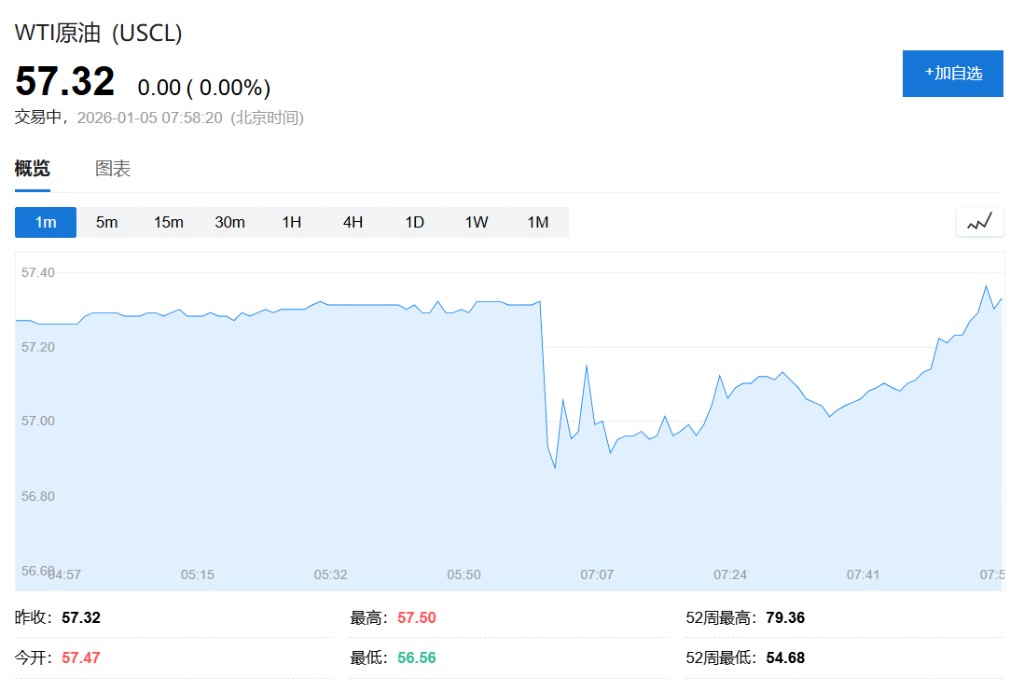
In stark contrast to the volatility in precious metals is the relative calm in the crude oil market. Although retail trading data from IG Group showed slight fluctuations in U.S. crude oil prices, analysts generally expect market sentiment to be subdued. The core logic behind this is that the fundamental supply and demand dynamics of the global crude oil market have fundamentally changed.

Brent crude oil slightly declined, while WTI crude oil remained stable.

According to the International Energy Agency (IEA), global oil supply is expected to exceed demand by 3.8 million barrels per day by 2026, setting a historic record for oversupply. Arne Lohman Rasmussen, chief analyst at A/S Global Risk Management, pointed out that this large-scale supply redundancy provides a strong buffer for the market. Even if the situation in Venezuela is turbulent, its current production of about 1 million barrels per day accounts for less than 1% of global supply, and key oil facilities such as the Jose port and Amuay refinery remain undamaged, resulting in a very low risk of substantial supply disruption In addition, OPEC+ and its allies are expected to maintain their plan to suspend production increases, which also reflects the oil-producing countries' concerns about weak demand far more than their reaction to localized geopolitical conflicts.

American Oil Giants May Return to Venezuela

Despite the short-term stability of oil prices, Trump's long-term plans for Venezuela's oil industry have drawn industry attention. According to Xinhua News Agency, the White House has requested major American oil companies to make significant investments in Venezuela to repair the country's crude oil extraction infrastructure.

Reports indicate that officials have recently told executives of American oil companies that if they "wish to be compensated for the drilling platforms, pipelines, and other properties confiscated by the Venezuelan government, they must be prepared to return to Venezuela now and invest heavily to revitalize its severely damaged oil industry."

Industry insiders are cautious about the government's request, as they are concerned about the uncertain prospects of rebuilding Venezuela's devastated oil fields, and the political situation in Venezuela remains unclear for the foreseeable future.

Jorge Leon, head of geopolitical analysis at Rystad Energy, warned that historical experience shows that forced regime changes rarely stabilize oil supplies quickly, with Libya and Iraq serving as cautionary tales. Most of Venezuela's oil is high-cost, high-pollution extra-heavy crude, and it faces deep-rooted issues such as equipment theft and power shortages, making the recovery of production capacity a long and arduous process