Old Huang's $20 billion reasoning loop has taken shape

In just 7 days, Jensen Huang acquired Groq and AI21 Labs, with a total investment of over $20 billion, aiming to consolidate NVIDIA's position in the AI training and inference market. The team from Groq and 200 top AI PhDs from AI21 Labs have been brought under NVIDIA's umbrella, enhancing its technological strength. The founders of AI21 Labs are all top talents in the tech industry, possessing a wealth of patents and successful experiences. This acquisition will help NVIDIA gain an advantage in the fiercely competitive inference market
The wealthy Huang has successively acquired Groq and AI21 Labs within 7 days, with a total investment exceeding $20 billion.
On Christmas Eve, he spent $20 billion to package and take away Groq's "father of TPU" team;
Then he turned his attention to AI21 Labs, spending $2-3 billion to bring it under his wing, along with 200 top AI PhDs behind AI21.
Moreover, combined with the $900 million spent in September to acquire Enfabrica, after three consecutive acquisitions, NVIDIA has effectively closed the loop on the "hardware - network - architecture" chain.
AI21 and Groq are more compatible
NVIDIA's market share in AI training has already exceeded 90%, but the inference market presents a different picture:
Custom ASIC chips have captured 37% of the deployment share, with giants like Google and Broadcom eyeing the market, which is becoming increasingly fragmented.
Jensen Huang clearly does not want to fall behind in this new competition—talent acquisition has become the most direct way to break the deadlock.
Just a few days ago, Groq not only took away the LPU but also 90% of the company's employees.
The latest target, AI21, may superficially appear to be a $1.4 billion Israeli startup, but in reality, it is another "gathering place for PhD talent."
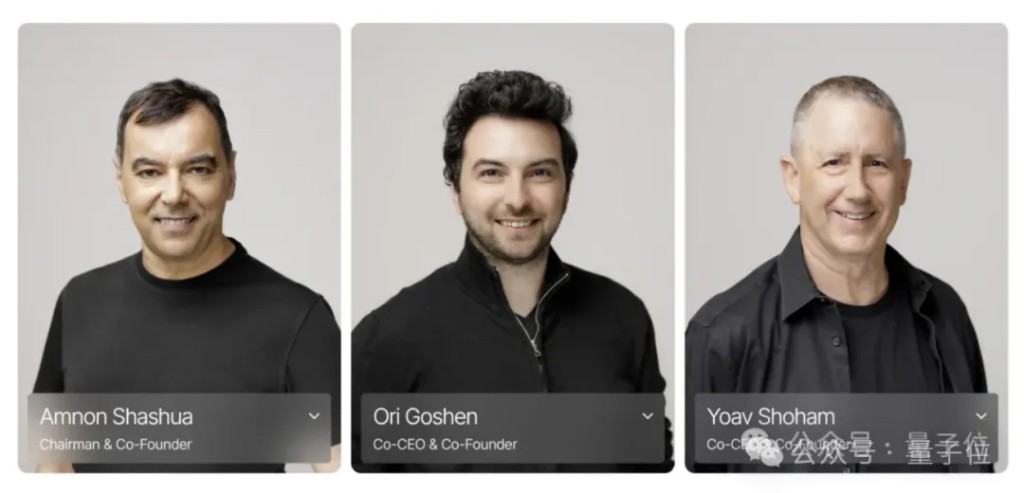
The three founders are top-tier figures in the tech circle.

Chairman Amnon Shashua is a chaired professor at Hebrew University, holding over 140 patents. He founded Mobileye in 1999, which was later sold to Intel for $15.3 billion, making him one of the top 20 richest people in Israel;
Co-CEO Ori Goshen is a serial entrepreneur, with his previous two companies either acquired or becoming industry benchmarks;
And there’s Yoav Shoham, an honorary retired professor from Stanford, who was previously Google's chief scientist and has had multiple entrepreneurial projects acquired by giants.
This group of leaders, along with over 200 PhDs, holds the trump card of the Jamba hybrid architecture.
Now that NVIDIA has acquired this dream team, things are getting interesting.
The previously acquired Groq uses SRAM, which is extremely fast but memory-limited, instead of HBM for its LPU.
Pure Transformer models do not perform well on this because the KV cache grows explosively with the context length.
However, the Jamba architecture held by the AI21 PhD team is exactly what is needed for memory-limited inference silicon chips like Groq.
Jamba adopts a Mamba-Transformer hybrid design, processing long texts 2.5 times faster than similar models, improving efficiency by 2-5 times compared to DeepSeek, Llama, and Google, and can easily run a 4GB KV cache within a 256K context Acquired Groq's LPU and core team; secured AI21, bringing in 200 PhDs, and directly addressing the shortcomings in inference architecture.
NVIDIA has officially begun its response to Google's TPU challenge...
Triple Acquisition Combo
Looking back at the triple acquisition combo, every step has been precisely calculated by Jensen Huang.
Previously, $900 million was spent to acquire Enfabrica and CEO Rochan Sankar along with his core team, filling the gap in network technology and solving the bottleneck in data transmission.
A few days ago, when acquiring Groq, not only did they gain technology but also goodwill.
Not only did they secure inference silicon, but they also brought along the core team led by "father of TPU" Jonathan Ross, transferring 90% of the employees to NVIDIA.
Moreover, each employee cashed out $5 million, and even those who had been with the company for less than a year had their "cliff period" canceled; Jensen Huang's move can be considered quite generous.
AI21 is responsible for the LLM architecture, transforming computing power into practical business solutions.
With the combination of the three, NVIDIA's "hardware - network - architecture" closed loop in the inference market has directly taken shape.
In the past, people were still guessing whether "GPUs would be squeezed out of the inference track," but now Jensen Huang has provided the answer with over $20 billion—
Not only to defend but also to maximize advantages through vertical integration.
Google has already proven with TPU that GPUs are not the only solution for AI inference, and Jensen Huang's moves aim to counter the threats from Google and Broadcom through a dual layout of talent and technology.
Behind the triple acquisition and 200 PhDs is technology that can double inference efficiency and the confidence to compete against Google and Broadcom.
Source: Quantum Bit
Risk Warning and Disclaimer
The market has risks, and investment requires caution. This article does not constitute personal investment advice and does not take into account individual users' specific investment objectives, financial conditions, or needs. Users should consider whether any opinions, views, or conclusions in this article are suitable for their specific circumstances. Investing based on this is at one's own risk