


The largest IPO in history! SpaceX reportedly seeks to go public next year, raising over $30 billion with a target valuation of $1.5 trillion

According to reports, SpaceX plans to go public as early as mid-2026. If SpaceX sells 5% of its shares as planned, the fundraising scale will reach approximately $40 billion, far exceeding the record of $29 billion set by Saudi Aramco in 2019. Following the news, EchoStar, which agreed to sell spectrum licenses to SpaceX, saw its stock rise by 12% during trading, before retreating to close up about 6%
SpaceX is advancing its IPO plan, aiming to raise significantly more than $30 billion, which is expected to become the largest IPO in history.
On December 9th, according to Bloomberg, SpaceX, under Musk, plans to go public as early as mid-2026, with financing expected to far exceed $30 billion. The report cites informed sources revealing that the company's target valuation is approximately $15 trillion.
If SpaceX sells 5% of its shares as planned, the fundraising scale will reach about $40 billion, far exceeding the record set by Saudi Aramco. In 2019, Saudi Aramco raised $29 billion, becoming the largest IPO globally. Notably, Saudi Aramco only sold 1.5% of its equity at that time, which is much lower than the circulation ratio of most listed companies.
Following the news, shares of other space companies rose on Tuesday. EchoStar, which has agreed to sell spectrum licenses to SpaceX, saw its stock rise by as much as 12% during the trading session, before retreating to close up about 6%. Space transportation company Rocket Lab rose 3.6%.
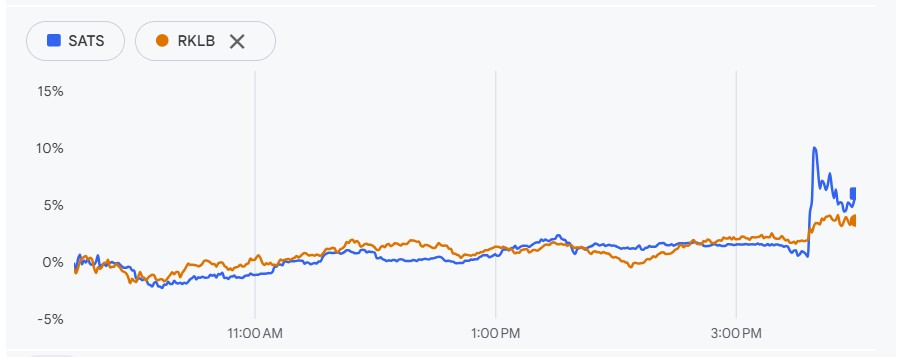 (Space concept stocks rise)
SpaceX is expected to use part of the IPO proceeds to develop a space-based data center, including purchasing the chips needed for operations. However, the report notes that the listing timeline may be adjusted due to market conditions and other factors, potentially delaying it until 2027.
Rapidly Growing Revenue Supports Valuation
According to reports citing informed sources, SpaceX expects revenues of about $15 billion in 2025, increasing to $22 billion to $24 billion in 2026, with most of the revenue coming from the Starlink business.
The company’s accelerated IPO pace is partly attributed to the strong growth momentum of the Starlink satellite internet service, including the prospects for direct mobile services and the development progress of the Starship rocket for lunar and Mars missions.
On December 6th, Musk posted on social media platform X:
SpaceX has maintained positive cash flow for years, conducting two regular stock buybacks each year to provide liquidity for employees and investors.
He stated that the valuation growth is a result of the progress of Starship and Starlink, as well as obtaining global direct mobile spectrum, which significantly expands the company's potential market size.
SpaceX executives have previously suggested the idea of spinning off the Starlink business into an independently listed company. The company’s president, Gwynne Shotwell, first proposed this concept in 2020.
The advancement of the overall company IPO plan indicates that the spin-off listing scheme may be shelved.
Internal Share Transactions Proceed First
While advancing the IPO plan, SpaceX has recently finalized the latest round of internal share sales.
According to reports citing informed sources, in the current secondary market transactions, SpaceX has set a share price of about $420, valuing the company higher than the previously reported $800 billion. The company allows employees to sell approximately $2 billion worth of stock, and SpaceX will participate in repurchasing some shares. Reportedly, this valuation strategy aims to set the company's fair market value ahead of the IPO.
SpaceX's main long-term investors include Founder's Fund, led by Peter Thiel, 137 Ventures, led by Justin Fishner-Wolfson, and venture capital firms such as Valor Equity Partners.
Fidelity Investments is also a significant investor, and Google's parent company Alphabet also holds shares
